
Marceline London
Project Gallery

Bespoke Electroacoustic Design, Sound System Installation & Commissioning for Marceline, Canary Wharf
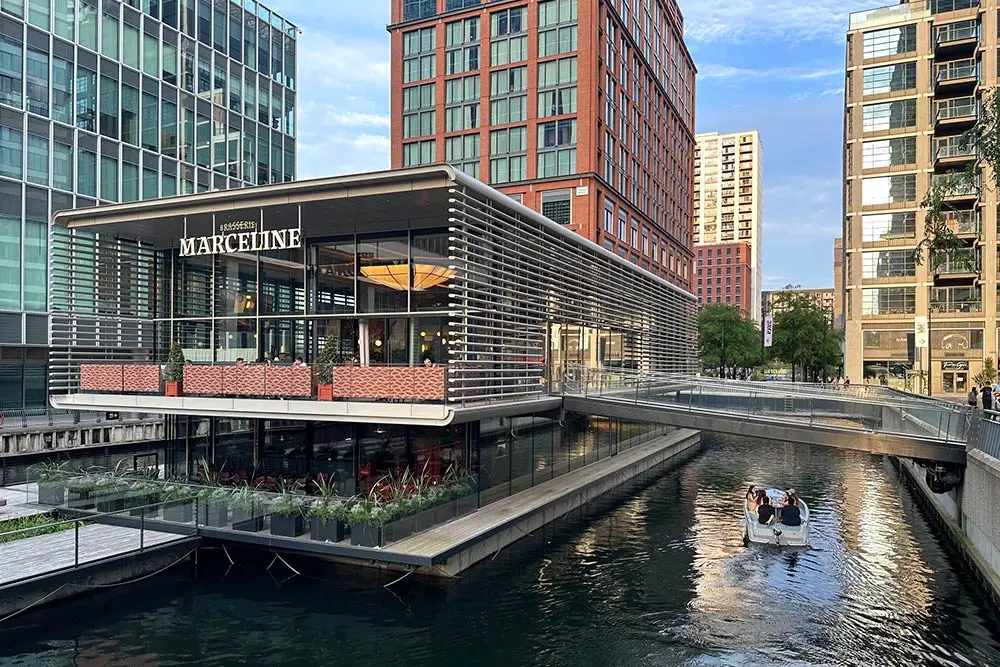
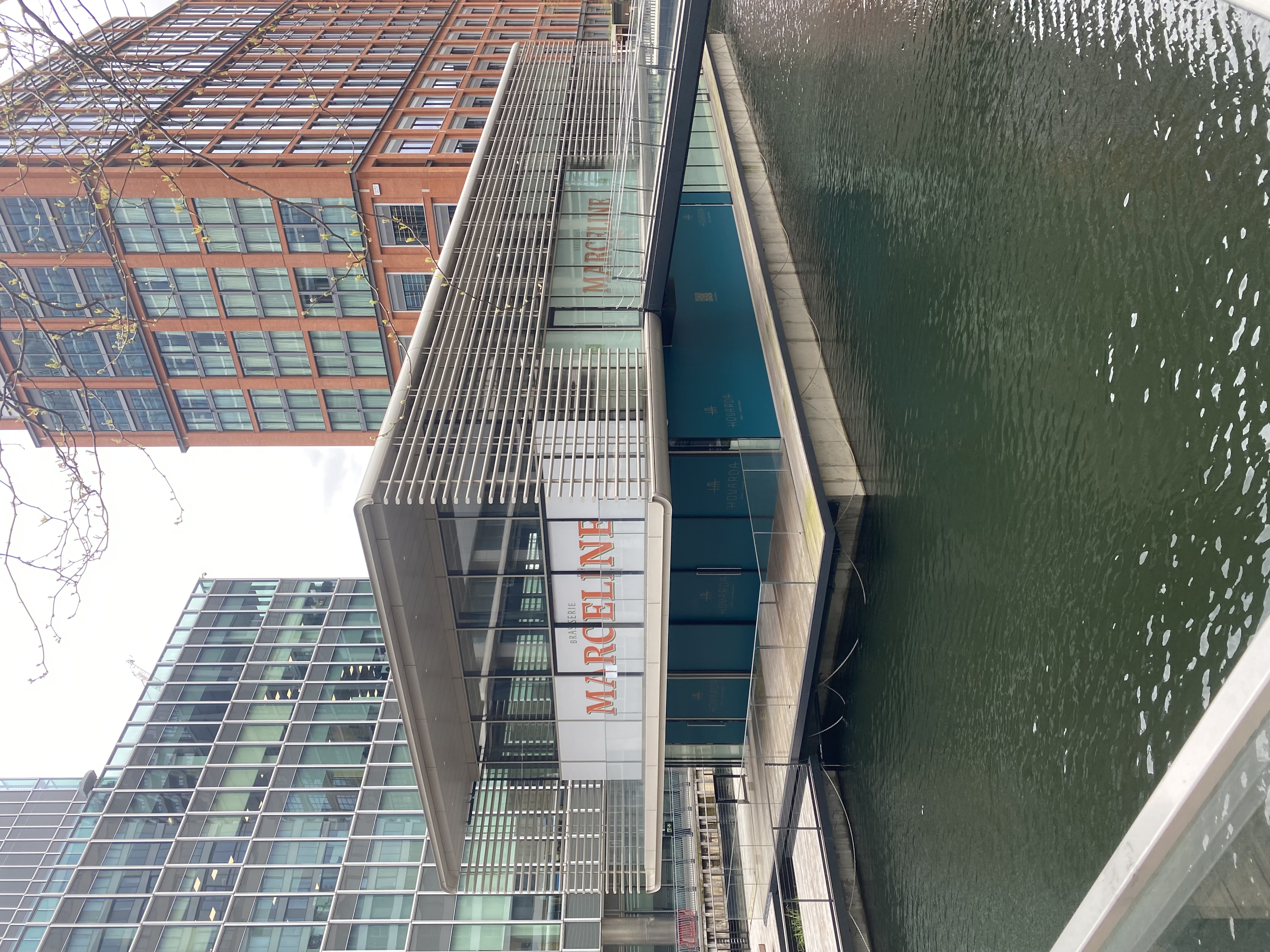
EMC Acoustics was appointed to provide the complete electroacoustic design, specialist sound system installation and commissioning for Marceline, a high-end restaurant and entertainment venue in Canary Wharf, London.
The project required much more than a conventional restaurant sound system. Marceline combines sophisticated dining areas with a dedicated nightclub in the basement, creating very different acoustic requirements within the same development.
The client appointed EMC Acoustics to manage the specialist audio package from initial concept and acoustic design through to 3D modelling, equipment specification, coordination, installation, system tuning and final commissioning.
Our objective was to create a bespoke audio environment that complemented the architectural design while delivering excellent sound quality, consistent coverage and effective control of sound throughout the venue.
Working with Populous
A key part of the project was our close collaboration with Populous, the global architecture and design practice involved in the design and delivery of Marceline.
Populous is internationally recognised for its work on major stadiums, arenas and entertainment destinations around the world. Marceline brought this design expertise into a high-end restaurant and nightlife environment.
From the early stages of the project, EMC Acoustics worked closely with the Populous team and other specialist contractors to ensure that the acoustic and audio requirements were fully integrated into the architectural and interior design.
Careful coordination was required for loudspeaker positions, cable routes, equipment locations, containment, architectural finishes and other building services.
Our team attended coordination meetings and worked seamlessly with the wider project team to identify potential issues early and ensure that each stage of the audio installation was properly planned before work commenced on site.
This collaborative approach was particularly important because the sound system needed to provide excellent technical performance without compromising the carefully considered interior design of the restaurant.
The Challenge
Understanding the Acoustic Requirements
Marceline presented two very different acoustic environments.
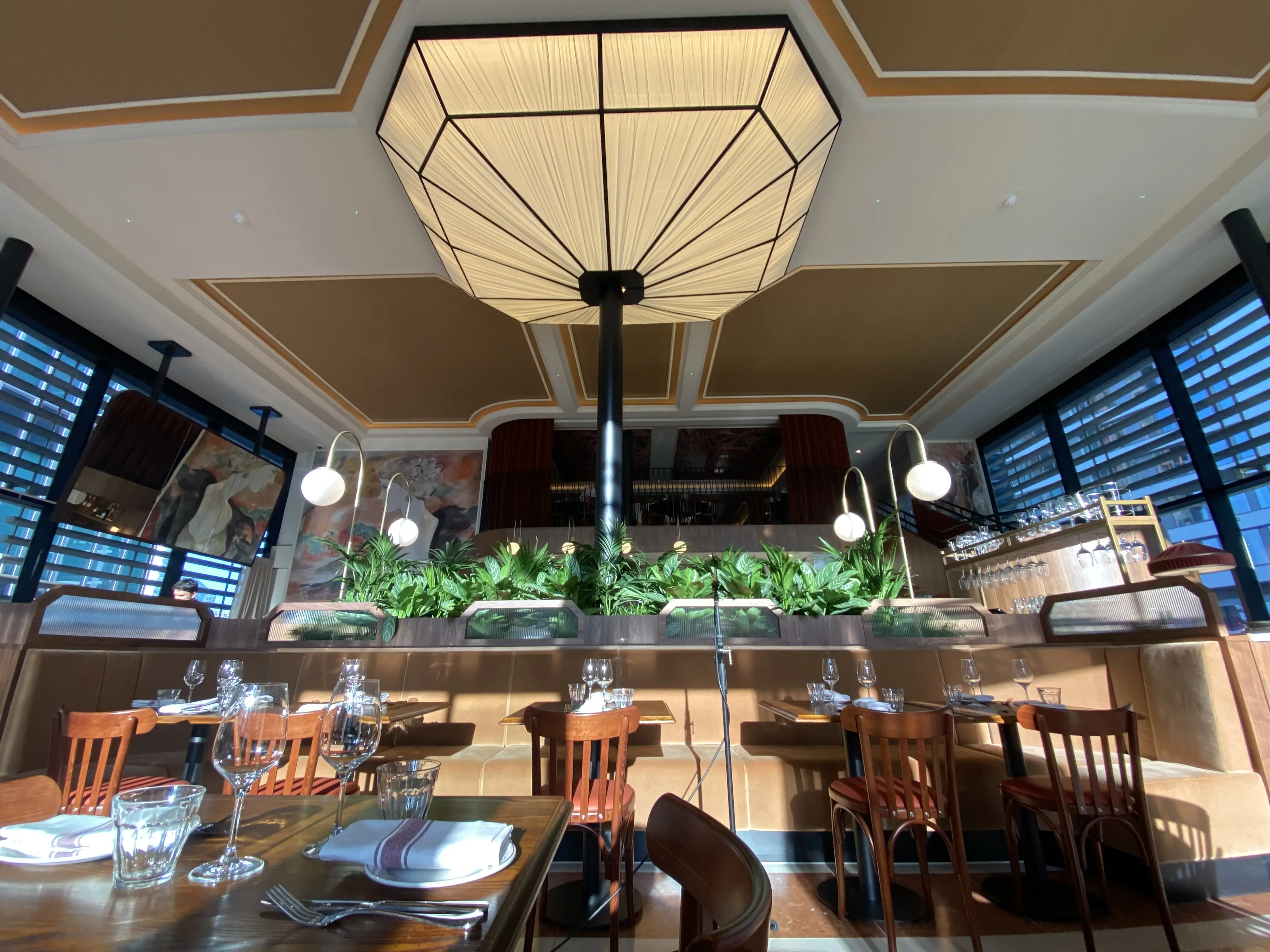
Within the main restaurant and dining areas, the system needed to provide warm, high-quality background and foreground music while maintaining a comfortable environment for conversation.
The basement nightclub had very different requirements. It needed a high-performance sound system capable of producing the energy and impact expected from a nightlife venue while maintaining greater control over how sound energy behaved within the building.
The proximity of neighbouring premises also meant that controlling unnecessary sound radiation was an important consideration throughout the design process.
Our Approach
3D Electroacoustic Modelling
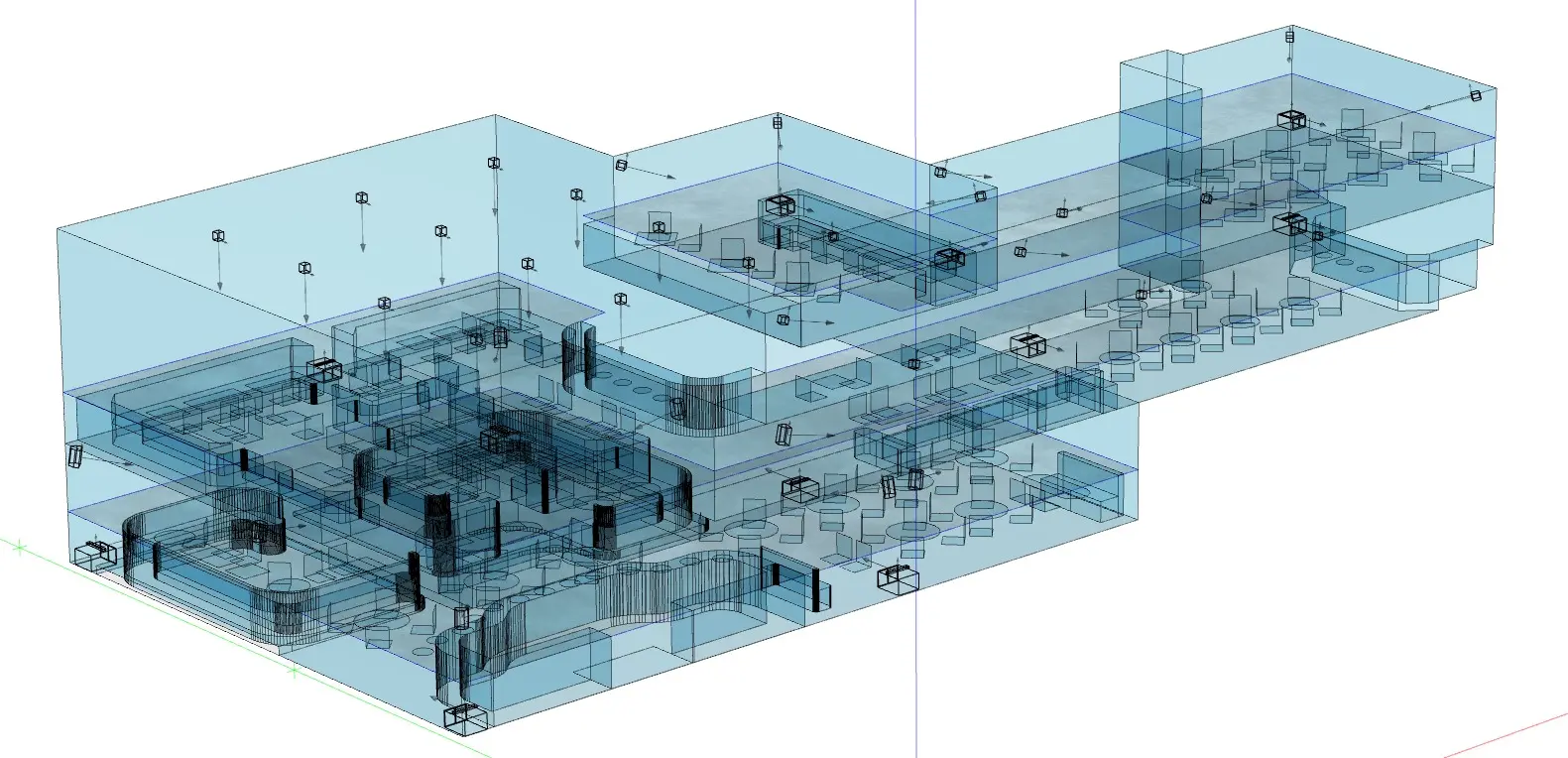
Before finalising the loudspeaker system, the EMC Acoustics engineering team developed a detailed 3D electroacoustic model using EASE software.
The architectural spaces were modelled to allow our engineers to simulate the performance of the proposed loudspeaker system before installation.
This design process enabled our engineers to optimise loudspeaker positions and system configuration before equipment was installed. Rather than relying solely on conventional speaker placement, the system was developed using engineering analysis and simulation to provide controlled and consistent coverage throughout the venue.
- Sound pressure level distribution
- Loudspeaker coverage across the dining areas
- Loudspeaker positioning and aiming
- Interaction between multiple loudspeakers
- Speech and music coverage
- Areas of excessive or insufficient sound level
- System performance within the architectural environment
System Design & Integration
Following completion of the acoustic modelling, EMC Acoustics developed the detailed electroacoustic design and equipment specification.
Every element was considered as part of a complete system rather than as individual pieces of equipment.
- Electroacoustic system design
- EASE 3D modelling and simulation
- Loudspeaker selection and specification
- Loudspeaker positioning and aiming
- Cardioid subwoofer system design
- Point-source loudspeaker configuration
- Audio zoning and distribution
- Digital signal processing
- Amplification and system control
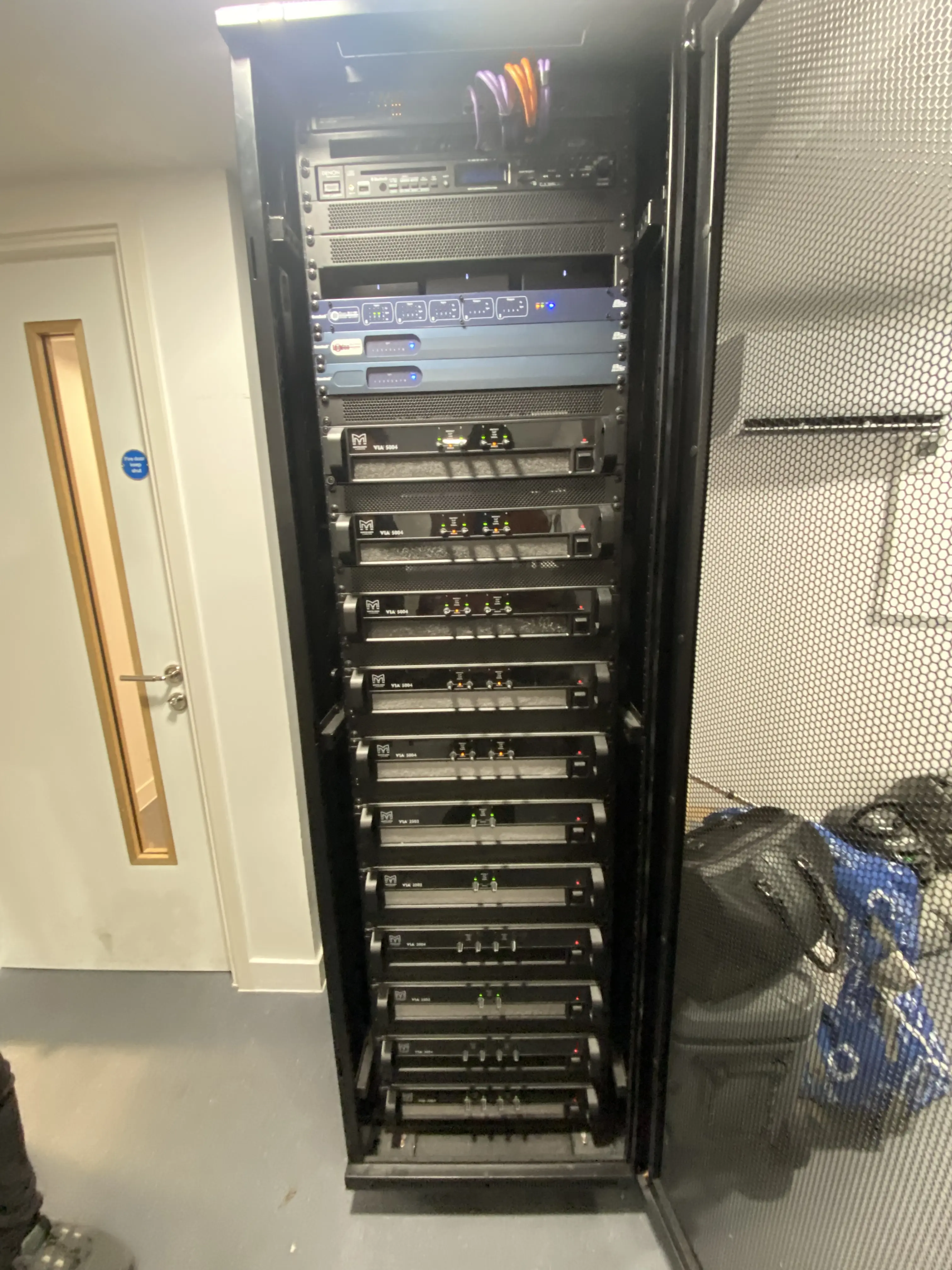
- Equipment rack design
- Cable and infrastructure coordination
- Integration with the architectural fit-out
- Installation and system configuration
- Testing, tuning and commissioning
From Design to Installation
Following the design phase, the client appointed EMC Acoustics to continue with the project and deliver the specialist audio works through to completion.
Our installation team worked alongside Populous and the wider construction and fit-out teams to ensure that the original acoustic design intent was maintained during construction.
Close communication between the design and installation teams was particularly valuable. Because EMC Acoustics was responsible for both the engineering design and delivery of the audio system, technical decisions made during the design stage could be followed through directly on site.
Where site conditions required adjustments, our engineers were able to review the changes and provide solutions without losing sight of the overall acoustic objectives.
Testing, Tuning & Commissioning
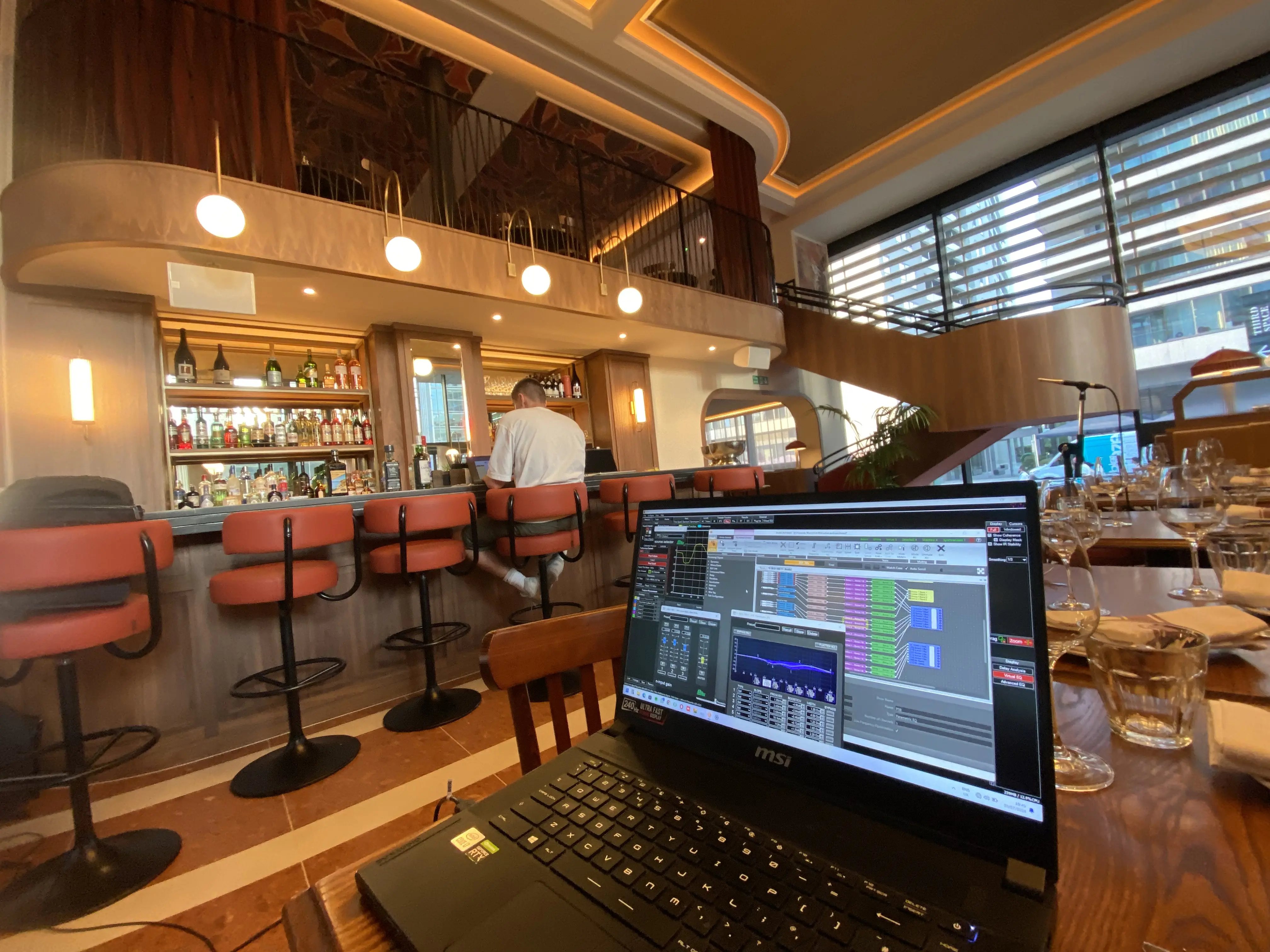
Once the installation was completed, EMC Acoustics carried out comprehensive testing and commissioning of the complete system.
Our engineers checked the operation of each loudspeaker, amplifier, DSP channel and audio zone before carrying out final system optimisation.
The loudspeaker systems were aligned and tuned to achieve the intended performance, with particular attention given to level consistency, system balance, crossover configuration, equalisation and low-frequency control.
The nightclub system received additional attention to ensure that the cardioid subwoofer arrangement and main loudspeaker system operated together as designed.
Final commissioning allowed the theoretical design and EASE modelling to be verified and optimised within the completed venue.
Recomended Solution
Bespoke Restaurant Sound System
The dining areas required the audio system to become part of the atmosphere rather than dominate it.
EMC Acoustics designed a distributed loudspeaker solution that provided consistent music coverage while allowing different areas of the restaurant to be individually controlled.
Loudspeaker locations were carefully coordinated with the architectural and interior design so that the technology could be integrated discreetly into the finished space.
The system was divided into appropriate audio zones, providing the venue's operational team with flexibility to adjust levels and programme material according to different areas, occupancy levels and events.
Basement Nightclub
The basement nightclub represented one of the most technically challenging elements of the project.
Unlike the restaurant, the nightclub required significantly higher sound levels and stronger low-frequency performance. At the same time, it was essential to control unnecessary acoustic energy and reduce sound radiation towards other parts of the building and neighbouring premises.
EMC Acoustics therefore developed a specialist loudspeaker configuration incorporating cardioid subwoofer technology.
The cardioid arrangement was designed to provide powerful low-frequency performance within the required audience area while improving control of low-frequency energy behind the subwoofer system.
The main system incorporated carefully selected point-source loudspeakers with coaxial compression-driver technology, allowing our engineers to achieve controlled coverage and direct acoustic energy towards the required listening areas.
This approach provided the nightclub with the required performance while giving the engineering team greater control over how sound was distributed within the venue.
Expected Outcomes
The completed installation provides Marceline with a bespoke professional audio system designed specifically around the architecture and operation of the venue.
The restaurant benefits from controlled and consistent music coverage that complements the dining experience, while the basement nightclub has the higher-performance audio system required for late-night entertainment.
By combining 3D electroacoustic modelling, specialist loudspeaker design, cardioid low-frequency control, detailed architectural coordination, professional installation and final commissioning, EMC Acoustics was able to manage the specialist audio package from concept through to completion.
The close collaboration between EMC Acoustics, Populous and the wider project team was fundamental to the successful delivery of the project. Careful planning and coordination ensured that the technical audio requirements were integrated with the architectural vision rather than treated as a separate element at the end of construction.
Conclusion
Complete A–Z Electroacoustic Service
The Marceline project demonstrates EMC Acoustics' ability to take responsibility for complex hospitality and entertainment audio projects from initial concept to final handover.
By maintaining responsibility throughout the project, EMC Acoustics was able to ensure continuity between the original engineering concept and the finished installation.
The result is a carefully engineered audio environment that brings together architecture, acoustics and professional sound system technology within one of Canary Wharf's distinctive hospitality venues.
Consultation → Acoustic Design → 3D EASE Modelling → Equipment Specification → Architectural Coordination → Installation → System Integration → Testing → Tuning → Commissioning → Final Handover
.webp)