
Acoustic Treatment Specification
Acoustic treatment that is decorative rather than performance-specified either fails to reach the reverberation target or concentrates budget on the wrong surfaces; a specification based on measured data and absorption calculations eliminates both risks before procurement begins.
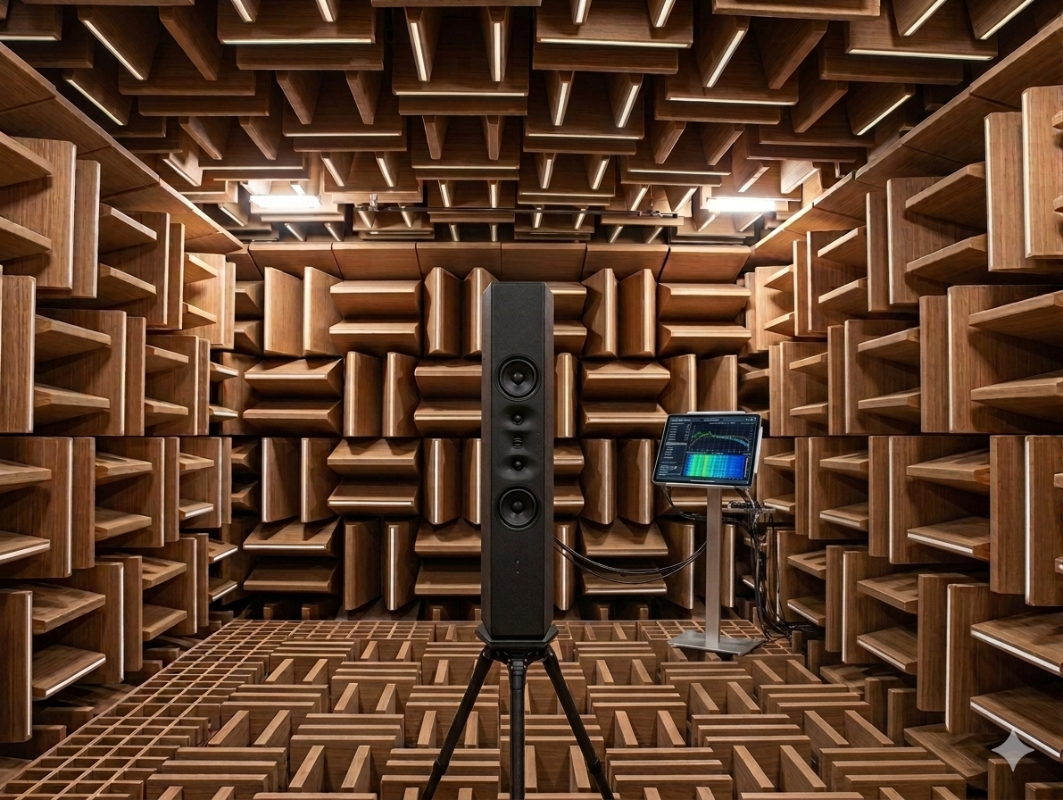
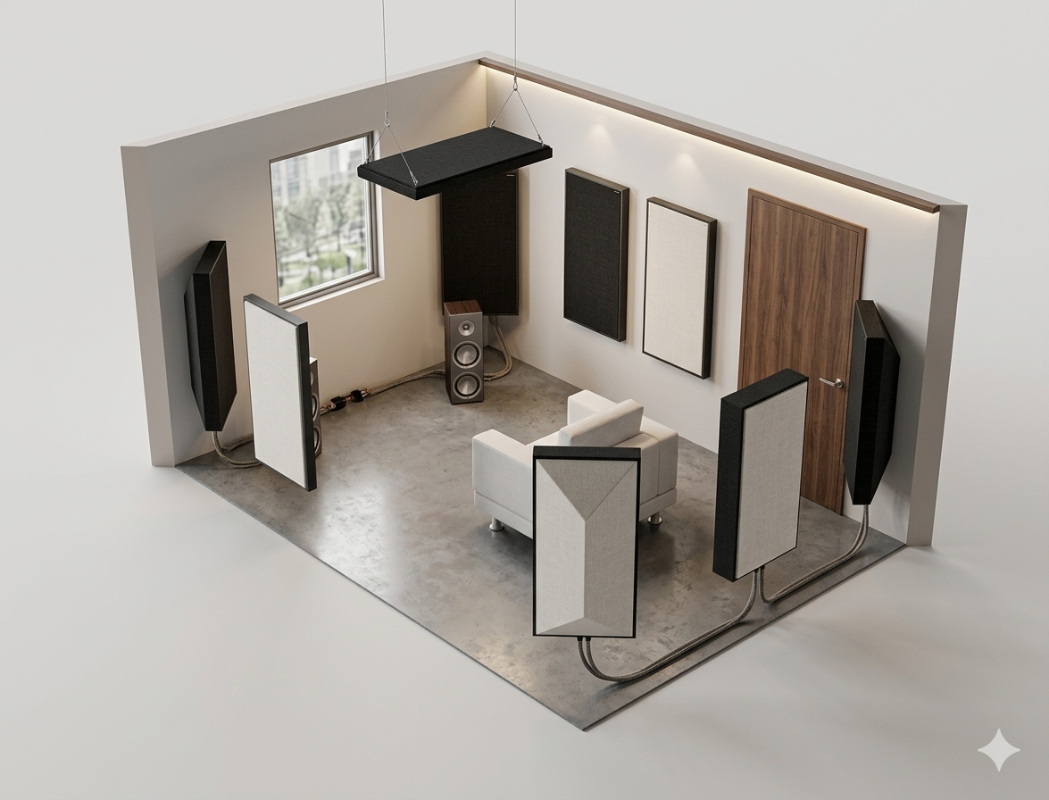
Acoustic Treatment Specification — What It Involves
Acoustic treatment specification is required when a room's reverberation time needs to meet a defined target, whether for BB93 classroom compliance, HTM 08-01 healthcare criteria, BREEAM HEA 05 credits or simply a comfortable working environment. Without a specification, treatment tends to be selected on appearance rather than performance, concentrated on the wrong surfaces, or purchased in the wrong quantities.
The service involves calculating the absorption area needed to achieve the target RT, specifying the absorber types and locations, and coordinating the product selection with the interior design. It is commissioned for offices, meeting rooms, restaurants, schools, healthcare facilities and any space where occupant communication or acoustic comfort is a design priority.
Why does professional acoustic treatment specification matter?
Achieving a defined RT target
A specification sets a measurable performance goal and identifies exactly what treatment is needed to reach it. This replaces guesswork with calculation and gives designers confidence that the space will perform as required after installation.
Design coordination
Treatment is specified to integrate with the interior design rather than contradict it. Product aesthetics, ceiling heights, fixture locations and fire classifications are all considered alongside absorption performance, so the specification works for both the designer and the acoustic consultant.
Cost control
Over-specifying treatment wastes budget; under-specifying produces a space that fails. An accurate specification means treatment is procured and installed to the correct quantity first time, with no additional work required after handover.
Post-installation verification
**Post-Installation Verification** We verify the installed acoustic treatment through on-site measurements, ensuring the required acoustic performance has been achieved and identifying any adjustments needed to optimise results.
What standards apply to acoustic treatment specification?
Acoustic treatment specifications are typically developed in accordance with BS 8233, BB93, Building Bulletin 93, and other project-specific acoustic criteria, depending on the building type and performance requirements. Additional guidance may be taken from relevant British Standards and industry best practice to achieve the required acoustic outcomes.
Post-installation verification
Performance target
We agree the target reverberation time with the client based on the room's intended use, volume and any applicable standard. This establishes the acoustic objective before any product selection is made.
Room assessment
We assess the room's geometry, volume and existing surface finishes to calculate the current reverberation characteristics and quantify the additional absorption area needed to reach the target RT.
Treatment specification
We specify the absorber type, area and location for each surface, selecting from ceiling panels, wall panels, suspended baffles and soft finishes. Products are coordinated with the interior designer or fit-out contractor to ensure acoustic and design requirements are met together.
Post-installation verification
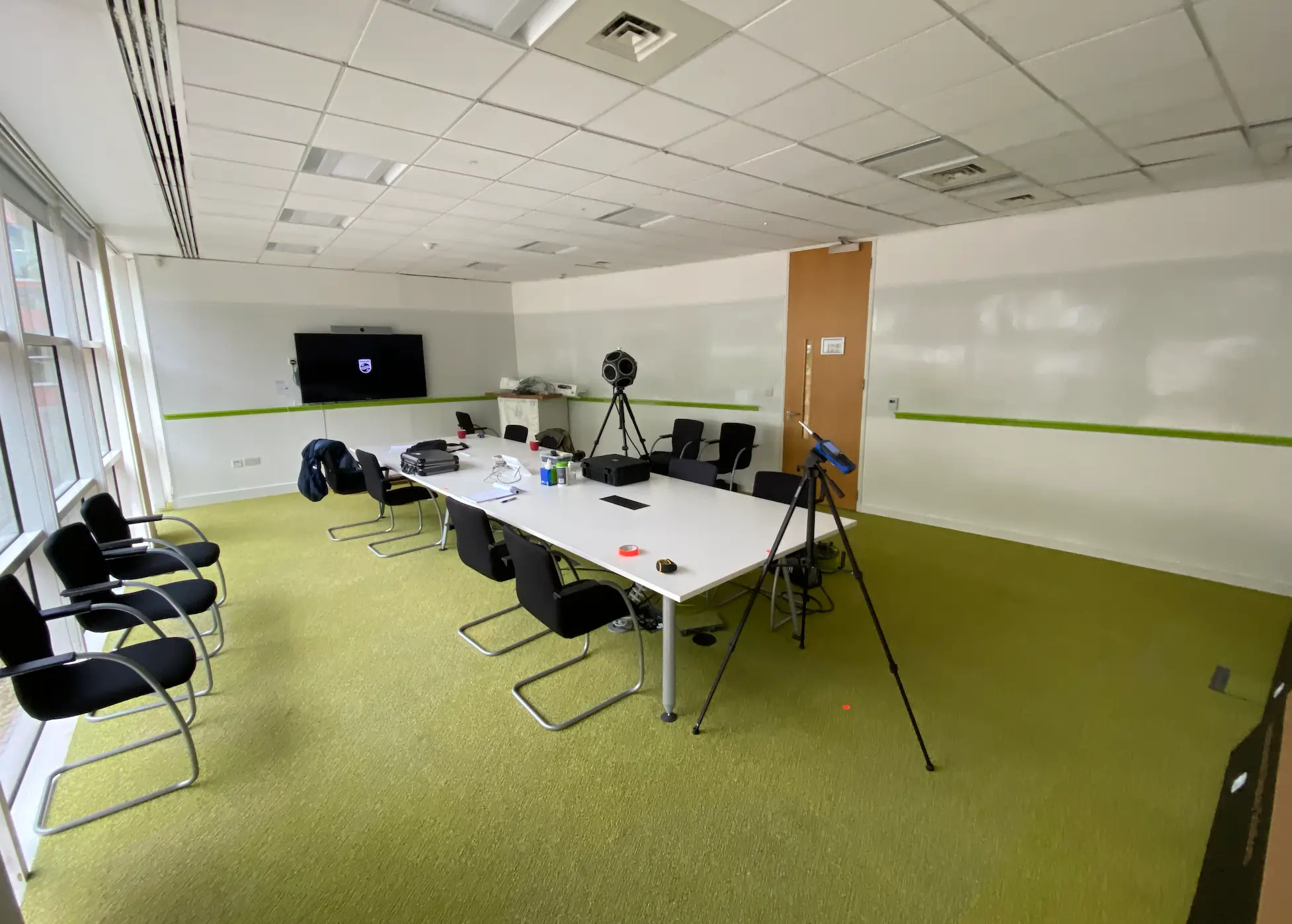
On completion, we carry out reverberation time measurements to BS EN ISO 3382 to confirm the installed treatment achieves the specified target. A short measurement report documents the result for the client's records.
Questions
Find answers to common questions about noise assessment and compliance.
These are different things. Acoustic treatment controls how sound behaves inside a room, reducing reverberation and noise build-up. Soundproofing controls how much sound passes between rooms through walls, floors and ceilings. Many spaces need both, but they involve different products and construction approaches and should be designed separately for each purpose.
Reverberation time (RT60) is how long sound takes to decay by 60 dB after a source stops. In a speech environment, an RT above approximately 0.6 seconds makes conversation harder to follow. For music, longer RTs are often desirable. The right target depends on room size, use and the applicable standard, and is agreed at the start of every specification.
We specify from a wide range including ceiling tiles, suspended baffles, wall-mounted panels, fabric-wrapped systems and proprietary acoustic finishes. Selection is based on published absorption data, aesthetic requirements, ceiling height constraints and fire classification requirements. We do not specify any single product range or manufacturer exclusively.
Yes. We measure the current reverberation time, calculate the shortfall against the target and specify targeted supplementary treatment. Panels can often be added to ceilings or walls without structural work, making acoustic treatment one of the more practical improvements available for occupied or recently completed buildings.
All products we specify carry fire classification data appropriate to the space type. In healthcare and education settings, Class 0 or Class B-s1,d0 ratings are typically required. We confirm the appropriate classification as part of the specification and coordinate with the fire strategy consultant where relevant.
Need more information?
Reach out to discuss your assessment needs.
Talk to an Acoustic Consultant
Looking for advice on building acoustics, noise control, environmental assessments, or compliance? Send us a message and we'll respond as soon as possible.


.webp)