
Classroom Acoustic Design
Classrooms designed without acoustic input routinely fail BB93 targets, undermining speech intelligibility and learning outcomes; designing to the standard before construction prevents the need for expensive post-completion remediation.

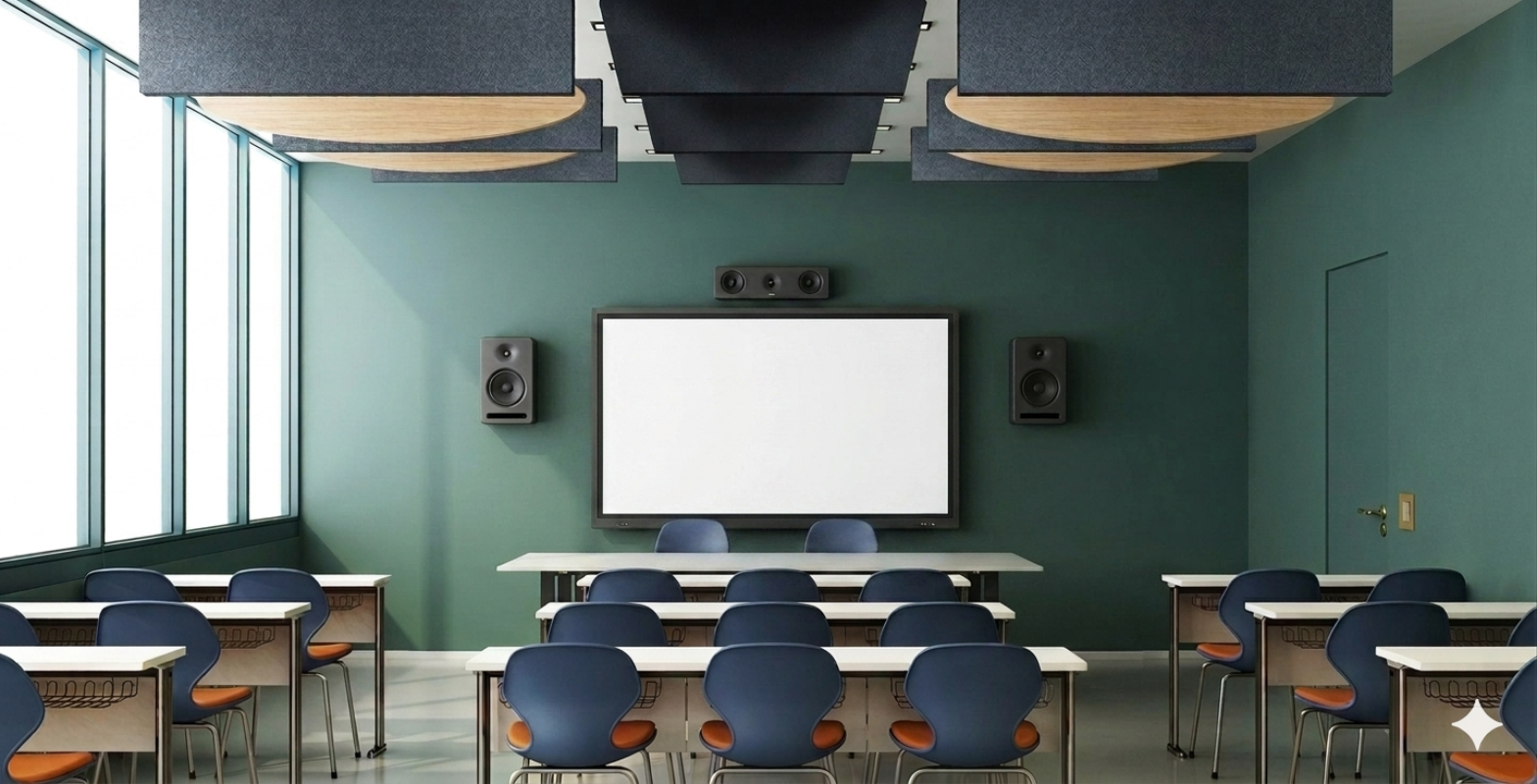
Classroom Acoustic Design — What It Involves
Classrooms with poor acoustics make it harder for children to hear and understand their teacher. Excessive reverberation smears speech; background noise from HVAC or adjacent spaces competes with the teacher's voice; and inadequate sound insulation allows corridor noise to disrupt lessons. BB93 exists because these problems are measurable, preventable and directly linked to educational outcomes, particularly for pupils with hearing impairment or English as an additional language.
Classroom acoustic design specifies the constructions and finishes needed to achieve BB93 reverberation time, sound insulation and background noise targets. It is typically commissioned at RIBA Stage 2 for new-build schools and academy conversions, and at specification stage for refurbishment projects where acoustic performance is a contract requirement.
Why does classroom acoustic design matter?
BB93 compliance
BB93 is a government-mandated standard for school acoustics with defined targets for reverberation time, sound insulation and indoor ambient noise level. Compliance is required for most government-funded school building projects. We design to meet all applicable targets and produce the evidence required for sign-off.
Better learning outcomes
Speech intelligibility in classrooms is directly linked to learning performance, particularly for pupils with hearing impairment or English as an additional language. Good acoustic design reduces listening effort and makes teaching more effective throughout the school day.
Teacher wellbeing
Teachers in reverberant or noisy classrooms raise their voices throughout the day, increasing fatigue and the risk of voice disorders. Classrooms designed to BB93 targets reduce vocal strain and support teacher wellbeing alongside pupil outcomes.
BREEAM Education credits
Schools failing to meet BB93 acoustic criteria face potential difficulties at practical completion, with building control or the client body requiring remediation before the building is accepted. Acoustic deficiencies in teaching spaces — excessive reverberation, inadequate sound insulation between classrooms or elevated HVAC background noise — are frequently costly to address once the structure is complete and finishes are installed, making early acoustic input the more cost-effective approach.
What standards apply to classroom acoustic design?
Acoustic design for school buildings in England and Wales is governed by Building Bulletin 93 (BB93), which sets performance criteria for reverberation time, airborne sound insulation between spaces and indoor ambient noise levels from HVAC and external sources. BB93 applies to new schools, schools undergoing material alteration and school extensions. Performance is measured post-completion using BS EN ISO 3382-2:2008 for reverberation time and BS EN ISO 16283-1:2014 for airborne sound insulation between teaching spaces.
BB93 criteria differ by room type: classrooms, music rooms, sports halls and large teaching spaces each carry different reverberation time targets reflecting the acoustic demands of their intended use. Meeting these criteria requires coordination between the architectural specification, room geometry, ventilation system and separating construction. Acoustic design input at RIBA Stage 2 allows these elements to be configured correctly before detail design is fixed, reducing the risk of non-compliance at post-completion testing and the cost of any remediation that a test failure would require.
Verification testing
BB93 brief and performance targets
We review the project brief, room types and the applicable BB93 performance standards for each classroom category. Targets for reverberation time, sound insulation and indoor ambient noise level are confirmed before any design decisions are made.
Reverberation and insulation specification
We specify the ceiling, wall and floor constructions needed to achieve BB93 reverberation time targets and the sound insulation values between teaching spaces and adjoining areas, including corridors, adjacent classrooms and external facades.
Background noise assessment
We assess the background noise contribution from HVAC and building services against BB93 indoor ambient noise level criteria, coordinating with the services engineer to specify any additional attenuation required to achieve compliance in each teaching space.
Verification testing
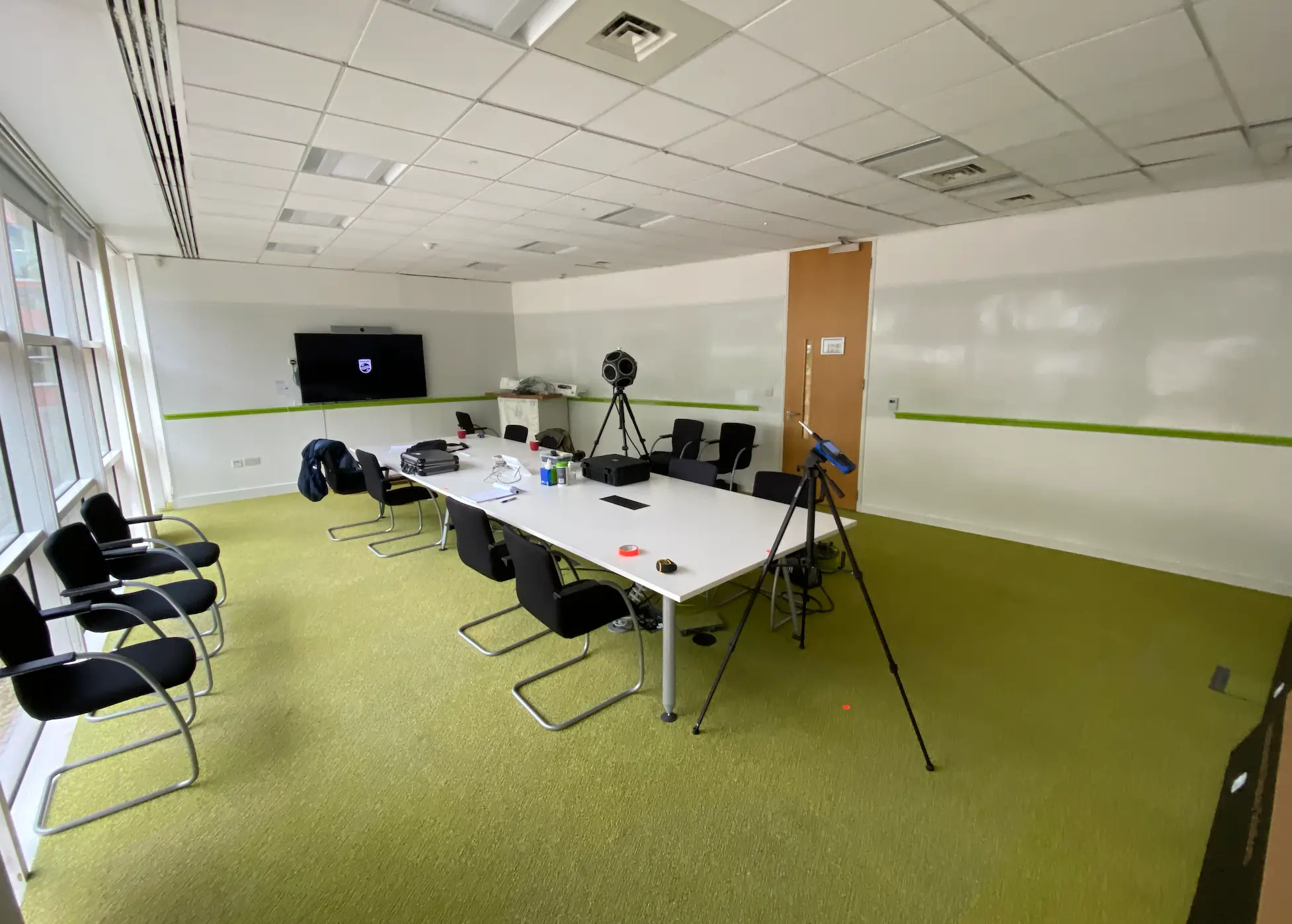
On completion, we carry out in-situ measurements of reverberation time, airborne sound insulation and background noise to confirm the as-built performance meets BB93. Test reports are issued for building control and Employer's Agent records.
Questions
Find answers to common questions about noise assessment and compliance.
BB93 applies to all new and significantly refurbished state-funded schools in England and Wales. Independent schools are not legally required to comply but BB93 is widely adopted as the appropriate professional standard. Academy conversions are typically required to comply as part of their funding agreement. We confirm applicability at the outset of each project.
BB93 sets targets for reverberation time, typically 0.4 to 0.8 seconds depending on room type and volume, indoor ambient noise level at 35 dB LAeq for standard classrooms, and sound insulation between teaching spaces and adjacent areas. Specific targets vary by room type and the age group being taught. We confirm the applicable criteria for each room at the start of the design.
Yes. We measure the current reverberation time and background noise levels, compare against BB93 targets and specify targeted improvements. This commonly involves replacing ceiling tiles with high-absorption alternatives, adding wall panels and addressing ventilation-related noise sources, most of which can be carried out during school holidays with minimal disruption to the timetable.
RIBA Stage 2 is ideal for new-build projects, when room geometries are defined but surface finishes are not yet fixed. For refurbishments, acoustic design should be commissioned before the specification is issued so acoustic requirements can be included in the tender documents. Late appointment significantly limits the ability to influence the design outcome without additional cost.
Typically a design report confirming the specification meets BB93 targets, and on completion, measurement reports for reverberation time, sound insulation and background noise in the completed rooms. The Employer's Agent or building control officer confirms the specific evidence requirements for the project. We structure our reports to meet them.
Need more information?
Reach out to discuss your assessment needs.
Talk to an Acoustic Consultant
Looking for advice on building acoustics, noise control, environmental assessments, or compliance? Send us a message and we'll respond as soon as possible.


.webp)