
Environmental Noise Assestments
An environmental noise chapter that lacks robustness in its survey methodology, calculation approach or criteria application is routinely challenged by Environmental Health Officers and Planning Inspectors; a well-structured assessment pre-empts that challenge and supports the application.
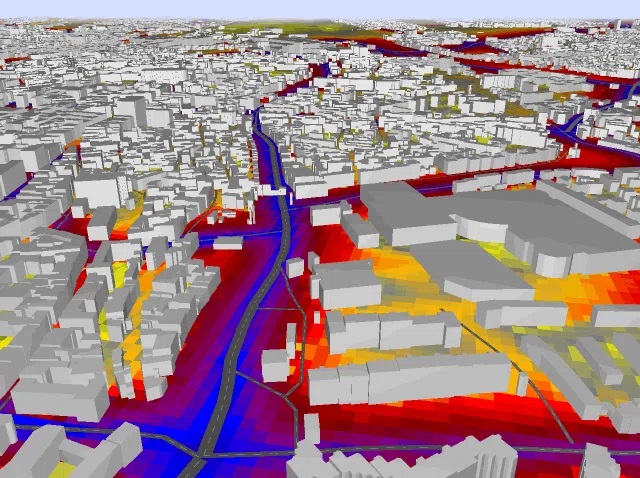

Environmental Noise Assessments — What They Involve
Major development projects, including energy facilities, logistics hubs, industrial premises and transport infrastructure, are required to demonstrate that their noise impact on the surrounding environment is acceptable before planning consent is granted. An environmental noise assessment that is methodologically incomplete, uses inappropriate survey periods or applies criteria incorrectly is routinely challenged by Environmental Health Officers, Planning Inspectors and statutory consultees, with significant consequences for programme and application success.
An environmental noise assessment involves establishing the existing acoustic baseline through monitored surveys at representative receptor positions, predicting or measuring the noise contribution of the proposed development using recognised calculation methods including BS ISO 1996, CRTN and BS 4142:2014+A1:2019, and evaluating the impact against the NPPF LOAEL and SOAEL framework, the local planning authority's noise policy and any criteria agreed with Environmental Health at pre-application stage. Where impacts are identified, the assessment defines the mitigation required to bring noise within acceptable limits.
Why does a robust environmental noise assessment matter?
Planning application robustness
Environmental Health Officers, Planning Inspectors and the Planning Inspectorate scrutinise noise assessments in detail. A methodologically robust assessment, with a defensible survey programme, a calculation approach agreed in advance with the determining authority and a transparent criteria framework, avoids the delays and costs of assessment challenges, requests for further information and re-consultation.
LOAEL and SOAEL criteria compliance
The NPPF establishes that planning decisions should avoid noise giving rise to significant adverse impacts on health and quality of life and mitigate other adverse noise impacts to a minimum. The LOAEL and SOAEL framework, further developed in the NPSE, provides the reference structure for assessing whether a proposal meets this threshold. A noise assessment that applies this framework correctly and documents the outcome clearly gives the planning authority the basis for a lawful and defensible decision.
Mitigation specification
Where the assessment identifies impacts that exceed LOAEL or would be significant without mitigation, it defines the noise control measures required, including source controls, barriers, facade insulation and operational restrictions, to bring noise within acceptable limits. Mitigation measures are specified in sufficient detail for inclusion in planning conditions, environmental commitments or a Construction Environmental Management Plan.
Environmental Noise Regulations compliance
An environmental noise assessment that is methodologically incomplete or applies assessment criteria incorrectly is vulnerable to challenge by Environmental Health Officers and Planning Inspectors, resulting in requests for further information, delays to determination or, in more serious cases, a condition of refusal. Assessments grounded in an agreed methodology, defensible survey design and correctly applied criteria protect the application from foreseeable challenge at every stage.
What acoustic and regulatory standards apply to environmental noise assessments?
Environmental noise assessments are conducted within a framework defined by BS ISO 1996-1:2016 and BS ISO 1996-2:2017, which cover description, measurement and assessment of environmental sound. For the assessment of industrial and commercial noise sources relative to background, BS 4142:2014+A1:2019 is the principal standard. Road traffic noise prediction uses Calculation of Road Traffic Noise (CRTN) and railway noise uses Calculation of Railway Noise (CRN), both approved by the UK government for planning applications. For major infrastructure, Lden and Lnight indicators are applied under the retained Environmental Noise Directive.
The planning policy framework within which assessment impacts are evaluated is set out in the National Planning Policy Framework (NPPF) and National Planning Practice Guidance (NPPG), which reference the LOAEL and SOAEL thresholds defined in the Noise Policy Statement for England (NPSE). For residential development near transport noise, ProPG: Planning and Noise (2017) provides the professional practice methodology. The applicable standards and policy documents for each assessment depend on the source type, receptor sensitivity and planning authority requirements, and are confirmed at pre-application stage.
Environmental Statement and conditions discharge
Pre-application consultation and survey design
We engage with the local planning authority and Environmental Health at pre-application stage to agree the scope of the noise assessment, including the survey methodology, monitoring locations, representative survey periods, calculation methods and the criteria against which impacts will be assessed. Agreement at this stage significantly reduces the risk of objections to the assessment methodology at application stage.
Baseline noise surveys and source characterisation
We carry out unattended baseline noise monitoring at representative receptor positions over a survey period agreed with the planning authority, collecting LA90, LAeq and LAmax data across day, evening and night windows. Source noise is characterised by measurement or by calculation using CRTN, CRN, BS ISO 1996 or BS 4142 as appropriate to the source type. Monitored baseline levels are analysed to establish representative values for use in the impact assessment.
Impact assessment and mitigation design
Predicted or measured noise levels from the proposed development are assessed against the LOAEL and SOAEL thresholds agreed at pre-application stage and against any specific limits in the local planning authority's noise policy. Where impacts exceed acceptable thresholds, we specify the noise mitigation measures required, including barrier design, facade treatment, source controls and operational restrictions, and demonstrate through calculation that the mitigated scenario meets the agreed criteria.
Environmental Statement and conditions discharge
The assessment findings, survey data, calculation methodology and mitigation specification are documented in an Environmental Noise Assessment report structured for inclusion in an Environmental Statement or standalone planning submission. Where planning consent is granted with noise conditions, we carry out the post-construction noise monitoring required to demonstrate that the as-built development meets the consented noise levels and discharge the relevant conditions.
Questions
Find answers to common questions about noise assessment and compliance.
An environmental noise assessment should be commissioned as early as possible in the project development process, ideally before the Environmental Scoping Report is submitted to the planning authority. Early instruction allows the scope of the assessment to be agreed with Environmental Health at pre-application stage, the survey programme to be designed correctly for the project and receptor types, and the assessment methodology to be aligned with the planning authority's noise policy before the application is submitted.
LOAEL (Lowest Observable Adverse Effect Level) and SOAEL (Significant Observed Adverse Effect Level) are the two key thresholds used in NPPF noise policy guidance to define the severity of noise impacts. Below the LOAEL, noise is not perceived as having an observable adverse effect. Between the LOAEL and SOAEL, there is an observed adverse effect and mitigation should be considered. Above the SOAEL, the impact is significant and development would normally be refused unless exceptional circumstances justify consent. The thresholds are not fixed numerical values but are determined by the source type, receptor use and assessment context, and should be agreed with the planning authority at pre-application stage.
A planning noise assessment is typically a standalone document submitted with a planning application to address a specific noise policy requirement, such as demonstrating that a proposal meets BS 4142 industrial noise criteria or BS 8233 internal noise targets. An EIA noise chapter is part of a formal Environmental Statement, required under the Town and Country Planning (Environmental Impact Assessment) Regulations 2017 for projects meeting defined screening criteria. The EIA chapter follows the Environmental Statement structure, assesses cumulative effects and uses formal impact significance terminology. EMC Acoustics prepares both and advises on which is required for the specific project.
Residential development near major roads typically requires an assessment to ProPG (2017) methodology, using Lden and Lnight indicators alongside daytime LAeq to assess suitability for residential use. The assessment uses CRTN to predict road traffic noise at the site and compares results against the ProPG agent of change design aims. Where noise levels exceed the design aims, facade treatment or site layout measures are specified to achieve acceptable internal noise levels. We carry out the survey, apply the ProPG methodology and produce the noise assessment report required to support the planning application.
To scope an environmental noise assessment, we need the proposed site location and boundary, a description of the development including any noise-generating operations, processes or plant, and the locations of nearby noise-sensitive receptors. Where available, any pre-application correspondence with the planning authority or Environmental Health regarding the noise assessment scope should also be provided. For EIA projects, the scheme description and indicative layout are required. We advise on the survey scope and methodology once these initial details are available.
Need more information?
Reach out to discuss your assessment needs.
Talk to an Acoustic Consultant
Looking for advice on building acoustics, noise control, environmental assessments, or compliance? Send us a message and we'll respond as soon as possible.


.webp)