
Healthcare Room Acoustics
Poor acoustic conditions in healthcare settings directly affect clinical outcomes and patient privacy; correct acoustic design to HTM 08-01 prevents these problems at the specification stage and produces the evidence needed for NHS technical compliance sign-off.
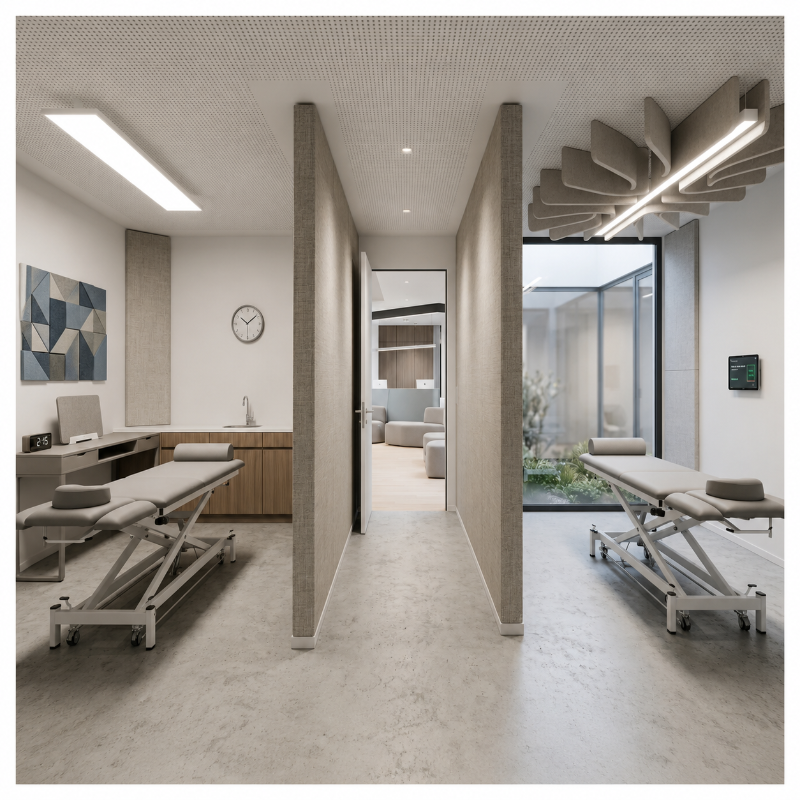

Healthcare Room Acoustics — What It Involves
Healthcare environments have acoustic requirements that directly affect clinical outcomes. Poor speech intelligibility in consultation rooms reduces accuracy; inadequate privacy means sensitive conversations are audible in adjacent spaces; excessive background noise disrupts patient recovery and increases physiological stress. These are not comfort issues — they are clinical quality and regulatory compliance issues addressed by HTM 08-01.
Healthcare room acoustics design applies HTM 08-01 criteria across clinical and patient areas, covering sound insulation between rooms, reverberation times in treatment and waiting spaces, background noise levels and PA system intelligibility. It is commissioned for new NHS and private healthcare buildings, ward refurbishments, GP surgeries and care home developments where HTM 08-01 or BREEAM Healthcare compliance is a project requirement.
Why does acoustic design matter in healthcare?
HTM 08-01 compliance
HTM 08-01 sets detailed acoustic performance requirements for NHS facilities, covering sound insulation, background noise, reverberation time and PA intelligibility by space type. We design to these requirements and produce the evidence documentation needed for NHS technical compliance sign-off.
Patient privacy
Inadequate sound insulation between consultation rooms and adjacent spaces puts patient confidentiality at risk. Correctly specified construction prevents sensitive conversations being overheard and supports GDPR obligations in clinical settings.
Clinical environment quality
Excessive reverberation reduces speech intelligibility in consultation and treatment rooms, increasing the risk of miscommunication and listener fatigue. Appropriate acoustic treatment ensures that clinical communication is clear and that staff and patients are not working against the acoustic environment throughout the day.
BREEAM Healthcare credits
Healthcare buildings that fail HTM 08-01 acoustic criteria at completion may require costly remedial construction to achieve compliance before the facility can be commissioned. Beyond compliance, inadequate sound insulation between consulting rooms and patient areas compromises patient confidentiality and clinical communication, creating both regulatory and reputational risks that are difficult to manage once the building is occupied and in clinical use.
What standards apply to healthcare room acoustics?
Acoustic performance in NHS buildings is governed by Health Technical Memorandum HTM 08-01, published by NHS Estates and Engineering. HTM 08-01 sets criteria for sound insulation between clinical spaces, background noise levels from building services and, for selected room types, reverberation time. The standard applies to all NHS-funded construction and is widely adopted for private healthcare facilities as best practice. Sound insulation is measured in-situ to BS EN ISO 16283-1:2014 and BS EN ISO 16283-2:2015 at completion.
For healthcare buildings seeking BREEAM Healthcare or BREEAM New Construction certification, HTM 08-01 compliance supports the HEA 05 Acoustic Performance credit. The suitably qualified person (SQP) requirement for BREEAM purposes is typically met by IOA membership at Associate or Full Member level. Reverberation time in clinical and waiting areas is assessed to BS EN ISO 3382-2:2008, with criteria drawn from HTM 08-01 and supplementary guidance where applicable.
Post-construction verification
Standards review and brief
We identify the applicable HTM 08-01 performance criteria for each clinical space type, including consulting rooms, wards, treatment rooms, waiting areas and plant rooms, and agree the targets with the project team before specification begins.
Sound insulation and reverberation design
We specify the construction required between clinical spaces to achieve the required sound insulation values, and the acoustic treatment needed to achieve HTM 08-01 reverberation time targets in treatment and patient areas.
Background noise and plant assessment
We assess HVAC and building services noise in clinical spaces against HTM 08-01 criteria, coordinating with the M&E engineer to specify any additional attenuation required to achieve the permitted background noise level in each zone.
Post-construction verification
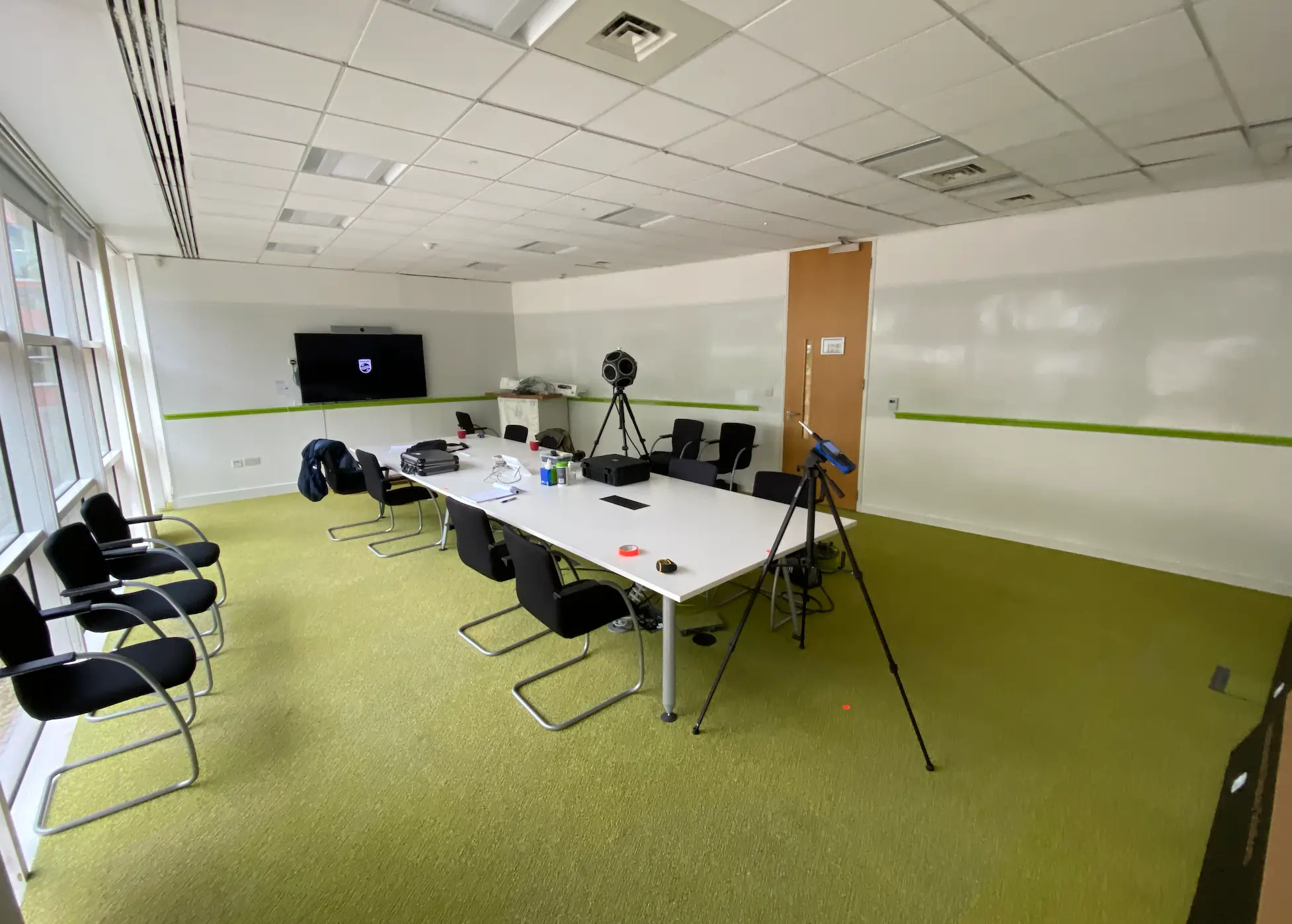
On completion, we measure sound insulation, reverberation time and background noise levels in completed clinical areas to BS EN ISO 16283 and BS EN ISO 3382. Results are documented for HTM 08-01 compliance evidence and BREEAM assessor submission.
Questions
Find answers to common questions about noise assessment and compliance.
HTM 08-01 is an NHS technical standard but is widely used as the professional benchmark for private healthcare design in the UK. Private developers, NHS Foundation Trusts and independent healthcare operators commonly adopt HTM 08-01 criteria regardless of formal regulatory requirement. We confirm applicability and advise on any deviations at the start of each project.
The most frequent problems are inadequate speech privacy between consulting rooms, excessive HVAC noise disturbing ward patients, reverberant corridors and waiting areas that amplify noise, and PA systems that fail STI-PA intelligibility thresholds. Each requires a different design approach. HTM 08-01 addresses all of these with specific performance criteria by space type.
Many improvements can be made in phases or during planned maintenance windows. Reverberation can often be improved with ceiling or wall treatment alone, without structural work. Sound insulation upgrades typically involve partition modifications and are best coordinated with the facility's maintenance programme to minimise disruption to clinical operations.
Lower noise levels and shorter reverberation times are consistently linked to better sleep quality, reduced physiological stress and higher patient satisfaction scores. Designing clinical environments to HTM 08-01 criteria directly supports these outcomes and contributes to a quieter, more intelligible environment that reduces errors and clinical miscommunication.
BREEAM Healthcare and BREEAM New Construction HEA 05 both award credits for sound insulation and reverberation performance. We identify the specific credit criteria applicable to the scheme, design to meet them and produce the measurement evidence required for submission to the BREEAM assessor alongside the final assessment.
Need more information?
Reach out to discuss your assessment needs.
Talk to an Acoustic Consultant
Looking for advice on building acoustics, noise control, environmental assessments, or compliance? Send us a message and we'll respond as soon as possible.

.webp)