
Sound Limiter
Sound limiter specification ensures amplified music and entertainment noise is controlled at source, satisfying planning conditions and licence requirements at venues across the UK
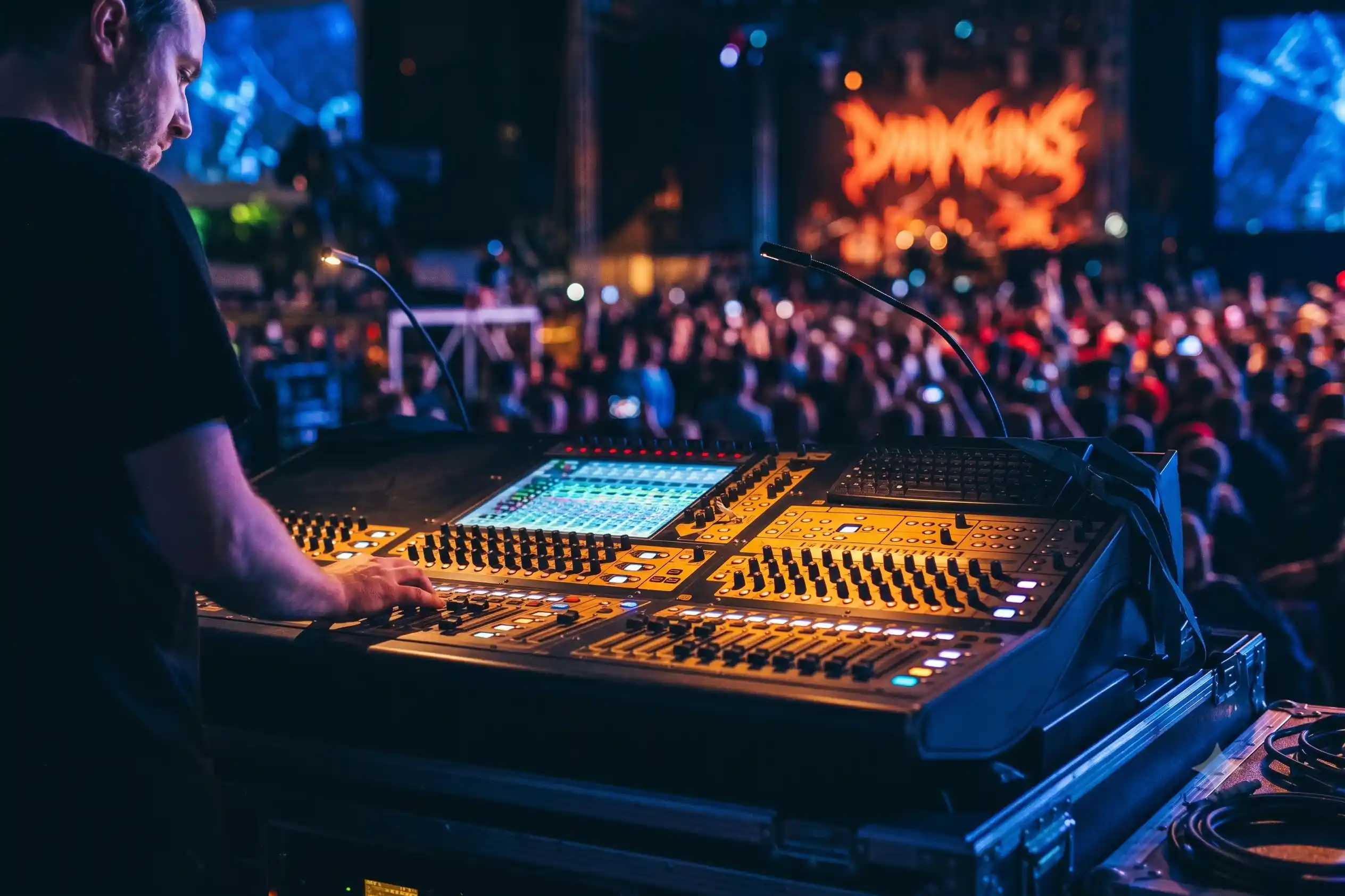
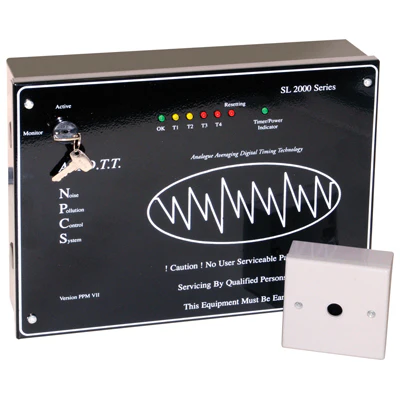
Sound Limiter Specification and Commissioning — What It Involves
Without a correctly specified and commissioned sound limiter, venues operating amplified music risk breaching planning conditions, attracting noise complaints and jeopardising their premises licence. An incorrectly set limiter, too high or too low, either fails to control noise or makes the venue unworkable for performers and operators.
Sound limiter specification involves acoustic assessment of the venue, measurement of noise breakout to neighbouring receptors, determination of the correct limit level and commissioning of the limiter unit. The limit level is set so that amplified noise at nearby residential properties remains within the margins required by the local planning authority or Environmental Health Officer.
Why is sound limiter specification important for licensed venues?
Planning condition discharge
Many planning permissions for licensed venues include a condition requiring a sound limiter to be installed and set to the satisfaction of the local planning authority. A properly commissioned limiter with a supporting acoustic report is the standard route to discharging that condition
Licence protection
Repeated noise complaints can trigger a licence review under the Licensing Act 2003, putting the premises licence at risk. Demonstrating that amplified music is controlled by a calibrated limiter provides objective evidence that the operator is managing the impact responsibly
Neighbour amenity
Amplified music is one of the most intrusive sources of neighbourhood noise, particularly in the evening and at night. A correctly set limiter keeps noise levels at nearby residential properties within acceptable limits, reducing the likelihood of complaints and enforcement action
Workable limit levels
Sound limiters set incorrectly — either too high to control noise output or too low to allow normal operation — create ongoing licence risk for the venue operator. A limiter calibrated above the level that satisfies the planning condition or Environmental Health requirement provides no protection; one set too conservatively restricts the programme. Commissioning by a qualified acoustic consultant with a documented report protects the operator in any subsequent enforcement dialogue.
What standards and guidance apply to sound limiters?
Sound limiters for licensed venues are specified not to a single national technical standard but in accordance with the planning conditions attached to the premises licence, Environmental Health requirements and any conditions on the planning permission. The limiting level is derived from the ambient noise criteria at the nearest noise-sensitive receptors, assessed using BS 4142:2014+A1:2019 and NPPF noise policies. The resulting operational limit is expressed in dB(A) LAeq at an internal measurement point agreed with Environmental Health.
Sound limiter commissioning involves on-site measurement to establish the relationship between the internal measurement point level and the amplified music level at the boundary of the nearest noise-sensitive receptor, allowing the limiter to be set at the highest level that keeps boundary noise within the agreed criterion. The commissioning report documents measurement methodology, instrument calibration, measurement positions, results and the agreed limiter setting, providing the operator with evidence to demonstrate compliance in any subsequent investigation by Environmental Health or a licensing authority.
Commissioning and reporting
Condition and brief review
We review the planning condition or licence requirement, the agreed noise criteria and any previous correspondence with the local authority or Environmental Health Officer. This establishes the target external noise levels before any site work begins and avoids abortive measurement.
Breakout measurement
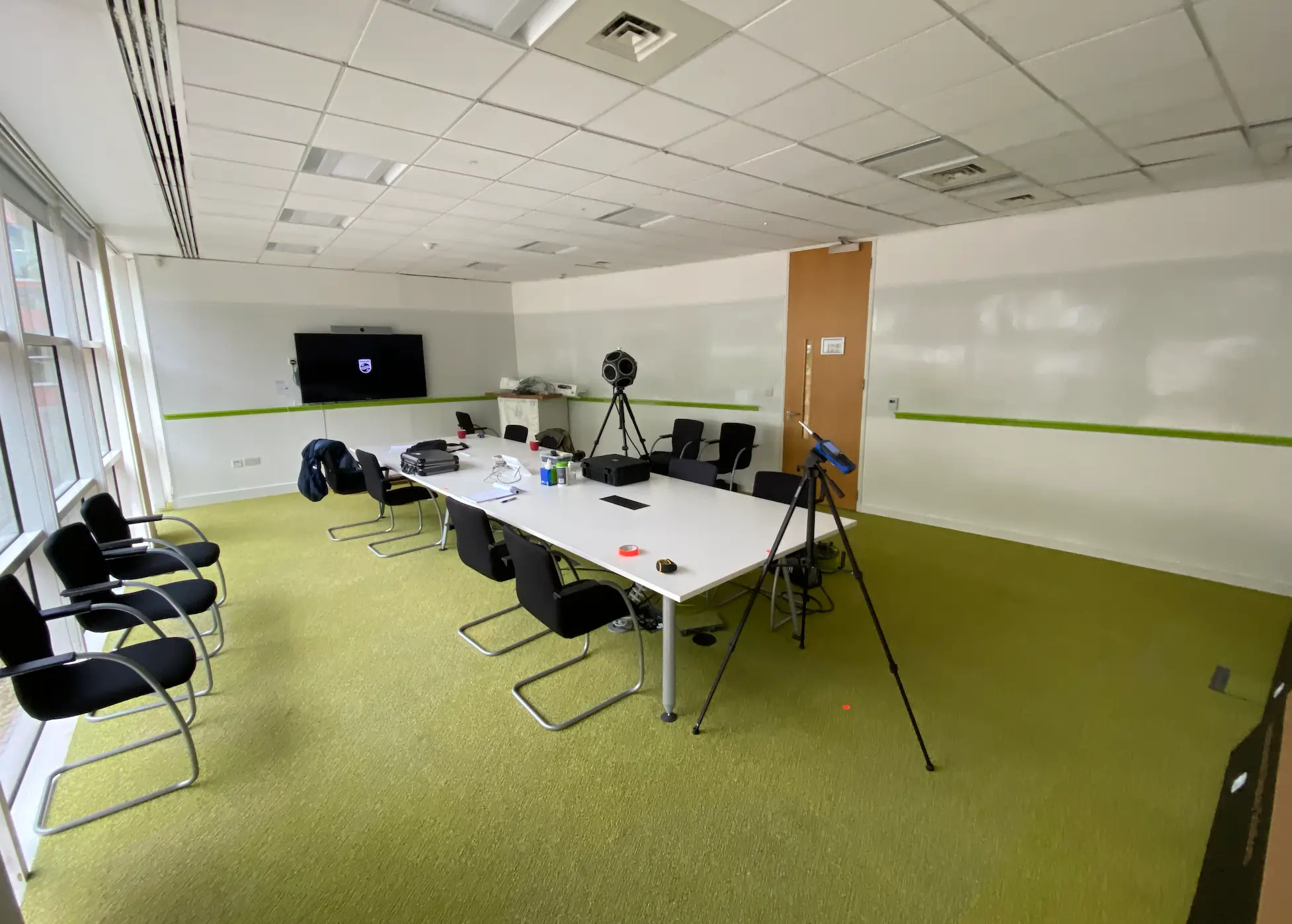
Using a calibrated pink noise source at a range of internal levels, we measure simultaneously at the limiter microphone position and at the nearest noise-sensitive receptor. This establishes the insertion loss of the building fabric and the direct relationship between internal and external levels across the relevant frequency range.
Limit level calculation
The maximum permissible internal level is calculated from the measured breakout relationship and the agreed external noise criteria. Tonal character and low-frequency content are considered, as bass frequencies typically dominate breakout and are the primary cause of neighbour complaints from amplified music venues.
Commissioning and reporting
The limiter unit is set to the calculated limit level and verified with a further round of simultaneous internal and external measurements. A commissioning report documenting the methodology, measurements, limit level and equipment settings is issued for submission to the planning authority or Environmental Health department
Questions
Find answers to common questions about noise assessment and compliance.
If your planning permission or premises licence includes a condition requiring amplified music to be controlled by a sound limiter, installation and commissioning is mandatory. Even where no formal condition exists, a calibrated limiter is often the most practical and defensible way to demonstrate control of music noise when complaints arise or a licence review is threatened
In most cases we can complete site measurements and issue the commissioning report within one week of instruction. Where a planning condition requires the limit level to be agreed with the local authority in advance, the programme depends on the authority's response time. We can accommodate short-notice bookings where an opening date or licensing hearing is imminent
The criteria are set by the local planning authority or Environmental Health department and vary between councils. They are typically expressed as a maximum LAeq or LA90 contribution from the venue at the nearest residential receptor, often referenced against BS 4142:2014+A1:2019 or the authority's own entertainment noise guidance. We liaise with the relevant officer to confirm the criteria before commissioning.
We are equipment-neutral and will commission any reputable sound limiter unit, including Pulsar, SoundPrint and equivalent makes, whether supplied by the venue operator, the PA installer or the fit-out contractor. The unit must have a calibrated microphone input, a configurable cut-off threshold and a tamper-evident or lockable control. We advise on suitable models if the operator has not yet procured one.
If the calculated limit level would make the venue unworkable, we investigate the options for improving the building's acoustic performance, including additional sound insulation to walls, doors, windows or the ceiling to increase the headroom between the internal limit and the external criterion. In some cases we engage with the planning authority or Environmental Health Officer to agree a pragmatic limit that reflects what the building can realistically achieve with reasonable mitigation.
Need more information?
Reach out to discuss your assessment needs.
Talk to an Acoustic Consultant
Looking for advice on building acoustics, noise control, environmental assessments, or compliance? Send us a message and we'll respond as soon as possible.


.webp)