
Sound System Design
A sound system specified without electroacoustic modelling is typically either over-specified, generating noise breakout problems and neighbour complaints, or under-specified, with uneven coverage and poor intelligibility that disappoints operators and audiences from the first event.


Sound System Design — What It Involves
Sound systems specified without acoustic input and electroacoustic modelling frequently produce uneven coverage, intelligibility shortfalls and excessive levels at building boundaries that generate noise complaints. Operators discover these problems at the first live event, when changes are both disruptive and expensive.
Sound system design involves specifying the loudspeaker type, quantity, placement, aiming and drive levels required to achieve the coverage uniformity, intelligibility and maximum sound pressure level appropriate for the venue's intended programme. The design uses electroacoustic prediction software to model SPL distribution, directional coverage and, where required, STI across the audience area before any equipment is ordered or installed.
Why is acoustic design important for your sound system?
Coverage uniformity across the audience area
Uneven sound level distribution means some audience positions receive too much level while others hear too little. Electroacoustic design specifies the loudspeaker layout, aiming and drive levels needed to achieve coverage uniformity within plus or minus 3 dB across the seating or standing area, so every position in the venue has a comparable listening experience.
Intelligibility for speech
Where a sound system is used for speech, whether for presentations, announcements or theatrical performance, the system must achieve STI values appropriate to the application and acoustic conditions of the space. Acoustic design accounts for the room's reverberation time and background noise level in specifying the direct-to-reverberant ratio required at each listening position.
Noise breakout management
A sound system designed without considering the building's acoustic separation from neighbours will drive levels inside the venue that cause noise breakout complaints. Acoustic design sets the maximum internal operating level consistent with the building's isolation performance, allowing the operator to run the system at full capacity without exceeding the external noise criteria at the site boundary.
Integration with planning conditions
A sound system designed in isolation from the acoustic environment it will operate in rarely achieves the coverage uniformity or intelligibility the operator requires. Excessive reverberation, reflective surfaces and poor room geometry degrade performance that additional loudspeaker quantity and power cannot compensate. Acoustic input at system design stage identifies and resolves these constraints before equipment is specified, preventing performance shortfalls that are difficult to correct once the system is installed.
What standards and references apply to sound system design?
Sound system design is informed by room use, audience layout, background noise and speech intelligibility requirements. Relevant guidance may include BS EN 60849, BS 5839-8, ISO standards and manufacturer performance data, depending on whether the system is for speech, music, public address or emergency use
Commissioning and optimisation
Acoustic analysis and performance targets
We review the room's acoustic characteristics, including reverberation time, background noise level, geometry and any planning or licence conditions that apply, and agree performance targets with the client covering SPL at the mix position, coverage uniformity, intelligibility where applicable, low-frequency extension and maximum operating level. These targets are established before any loudspeaker selection is made.
Electroacoustic modelling and loudspeaker specification
We model the proposed loudspeaker layout in electroacoustic prediction software, calculating SPL distribution and, where required, STI across the audience area. Loudspeaker type, manufacturer and mounting position are specified to achieve the agreed coverage uniformity and intelligibility targets. Model outputs are reviewed with the client and the AV contractor before equipment is procured.
System documentation and contractor coordination
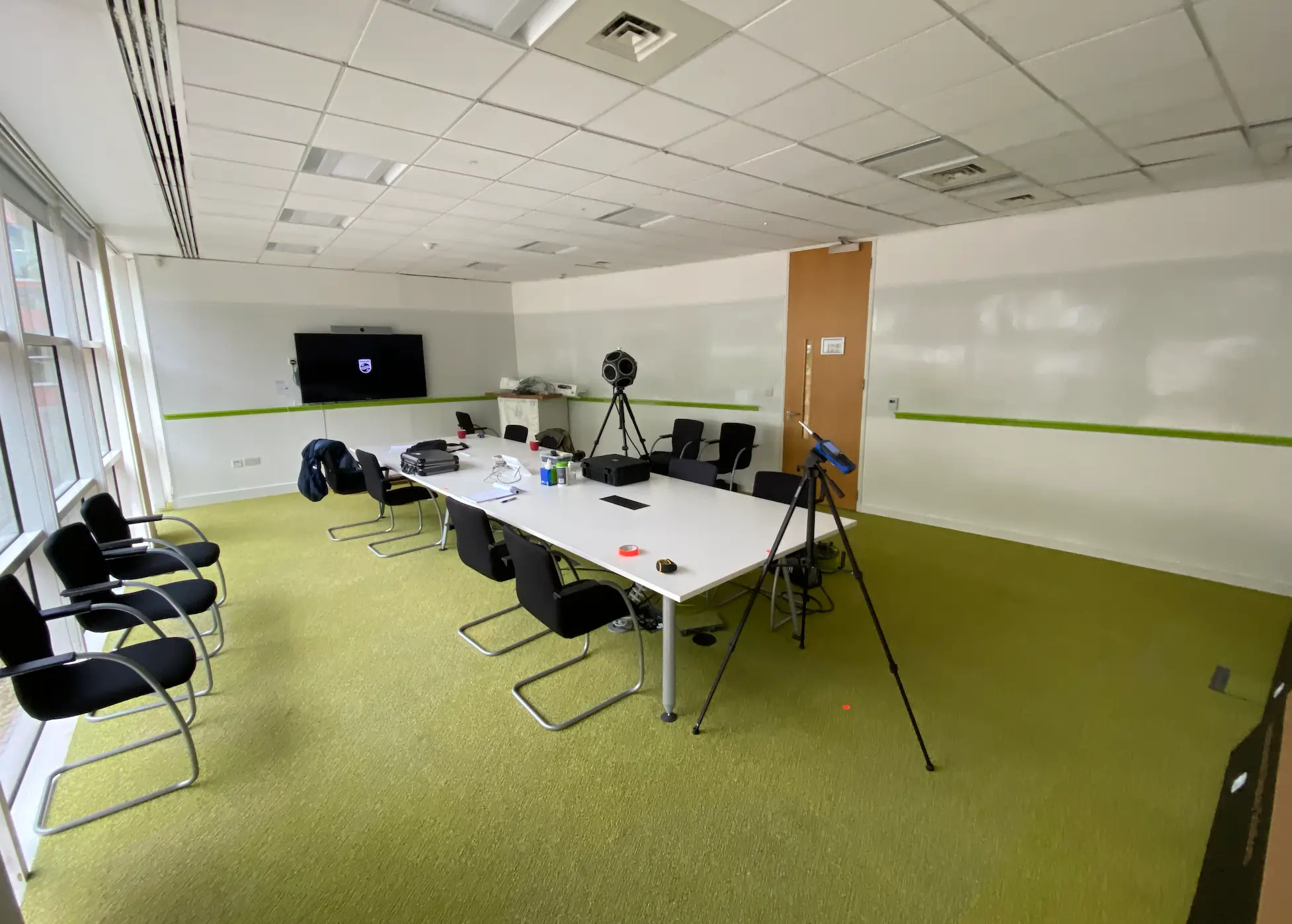
We produce a system design document covering loudspeaker schedules, rigging and bracket requirements, cable routing, processing and amplification requirements, and the DSP configuration needed to achieve the design targets. The document is issued to the contractor for tender and construction. On completion of installation, we carry out acoustic measurements to verify that the installed system performs to the design specification.
Commissioning and optimisation
We attend site to set equalisation, delay, limiting and zone routing on the installed system, aligning the processing to the as-built acoustic conditions of the space. SPL measurements across the coverage area confirm that uniformity targets are achieved. Where the installed system deviates from the design, we identify the cause and the corrective action required before handover.
Questions
Find answers to common questions about noise assessment and compliance.
Acoustic input is most valuable at the earliest possible stage, ideally at design concept when room shape, ceiling height and surface finishes are still subject to change. For new-build projects, RIBA Stage 2 or 3 is the right time. For fit-out or refurbishment projects, instruction at the start of the design phase allows the acoustic consultant to influence the specification before the AV contractor is appointed and equipment is ordered. Late instruction limits options and increases the risk of costly revisions.
Sound reinforcement systems amplify a live source, typically speech or music performance, for an audience. They are designed to deliver high SPL with good coverage and, where required, high speech intelligibility. Distributed audio systems serve background music or announcement functions across multiple zones, typically at lower SPL. The design approach and loudspeaker selection differ significantly between the two, and many venues require both, with separate systems for performance and background audio managed through a central DSP platform.
Validation takes place in two stages. Before installation, electroacoustic model outputs are reviewed against the performance targets to confirm that the proposed layout is adequate. After installation, acoustic measurements using calibrated instrumentation confirm that the installed system achieves the design SPL distribution and, where applicable, STI targets. Any shortfall identified at commissioning is addressed before the system is handed over to the operator.
If commissioning measurements show that SPL distribution, coverage uniformity or intelligibility targets are not met, we identify whether the shortfall is a function of loudspeaker positioning, processing configuration or a discrepancy between the installed equipment and the design specification. Corrective actions are specified and the system is re-measured after adjustment. The commissioning report is not issued until the system performs to the agreed targets.
Yes. We assess the current system performance by measuring SPL distribution and, where relevant, STI across the venue and comparing results against appropriate design targets. In many cases, significant improvements can be achieved through DSP reprogramming, equalisation adjustment, repositioning of selected loudspeakers and the addition of supplementary fills for problem areas. A full system replacement is recommended only where the installed equipment is fundamentally unsuited to the acoustic conditions or the operator's programme requirements.
Need more information?
Reach out to discuss your assessment needs.
Talk to an Acoustic Consultant
Looking for advice on building acoustics, noise control, environmental assessments, or compliance? Send us a message and we'll respond as soon as possible.

.webp)