
System Optimisation and Tuning
An installed sound system that has never been properly measured and tuned will typically exhibit uneven frequency response, misaligned coverage zones and inter-system time coherence problems that no amount of on-the-day mixing can fully compensate.
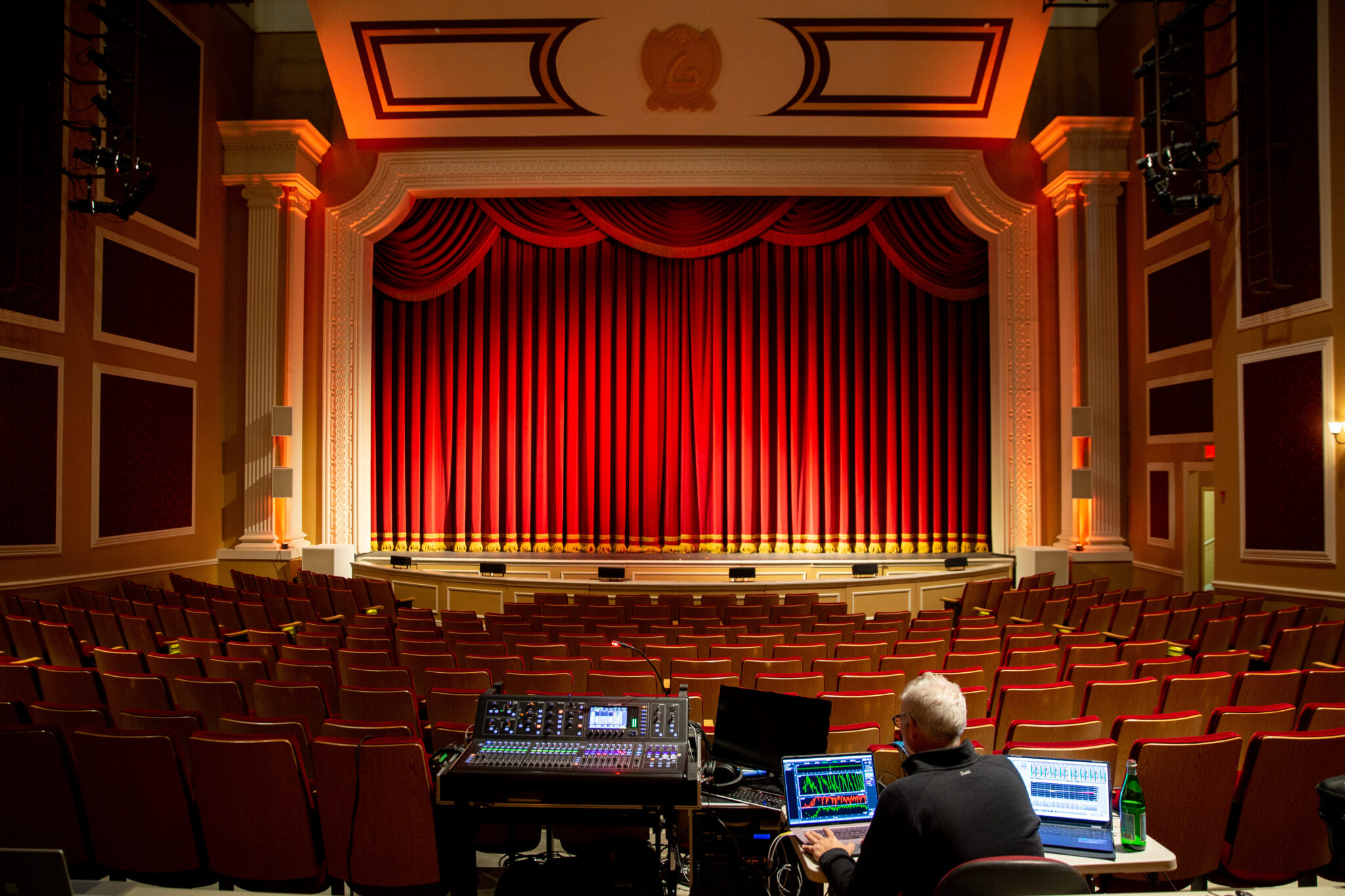

Sound System Optimisation and Tuning — What It Involves
Sound systems are rarely operating at their full capability when first switched on. Manufacturers' default DSP settings are not calibrated to the acoustic characteristics of the specific room, and even well-designed systems require measurement and adjustment in the as-built space to achieve their intended performance. Systems that have been running without proper tuning accumulate compensatory adjustments made by operators and engineers over time, which can progressively degrade performance and make the system unpredictable.
Sound system optimisation involves a structured sequence of acoustic measurements, analysis and DSP adjustments. System alignment establishes correct time domain relationships between loudspeaker subsystems using impulse response analysis and delay correction. Equalisation is applied using transfer function measurement to correct the system's frequency response to a defined target curve. Level calibration sets each amplifier and zone channel to consistent reference levels. The process is documented so that future operators and service engineers understand the baseline configuration and can restore it after maintenance.
Why does sound system optimisation matter?
Achieving the design specification
A sound system designed to achieve defined coverage uniformity, tonal balance and intelligibility targets will only deliver those results if the installed and configured system is aligned to the acoustic characteristics of the as-built room. Measurement-led optimisation is the step that converts the design specification into actual performance.
Consistent performance across zones
Multi-zone systems serving spaces with different acoustic characteristics require zone-specific equalisation and level calibration to achieve consistent results. Without systematic measurement and adjustment, differences in response between zones create an uneven listening experience that degrades operator confidence in the system and complicates live mixing.
Longevity of the installed investment
A well-documented, properly tuned system is significantly easier to maintain and support than one running on undocumented compensatory adjustments. When components are replaced or the system is serviced, a documented baseline configuration allows the correct settings to be restored without guesswork, protecting the operator's investment in the original installation.
Operator confidence and usability
Many installed sound systems underperform because they were commissioned without reference to measured room acoustic data, leaving equalisation settings, delay alignments and level distributions that do not reflect actual site conditions. Measurement-led optimisation corrects these settings to recover the coverage uniformity and tonal balance the design intended, often significantly improving intelligibility and listener experience without any additional hardware procurement or installation.
What measurement standards and tools are used in system optimisation?
System optimisation verifies that installed audio systems perform as intended in the real acoustic environment. Measurements, calibration and tuning are used to improve clarity, coverage and balance, with performance checked against the original design intent and relevant electro-acoustic guidance.
Post-optimisation verification and handover
Baseline measurement and diagnosis
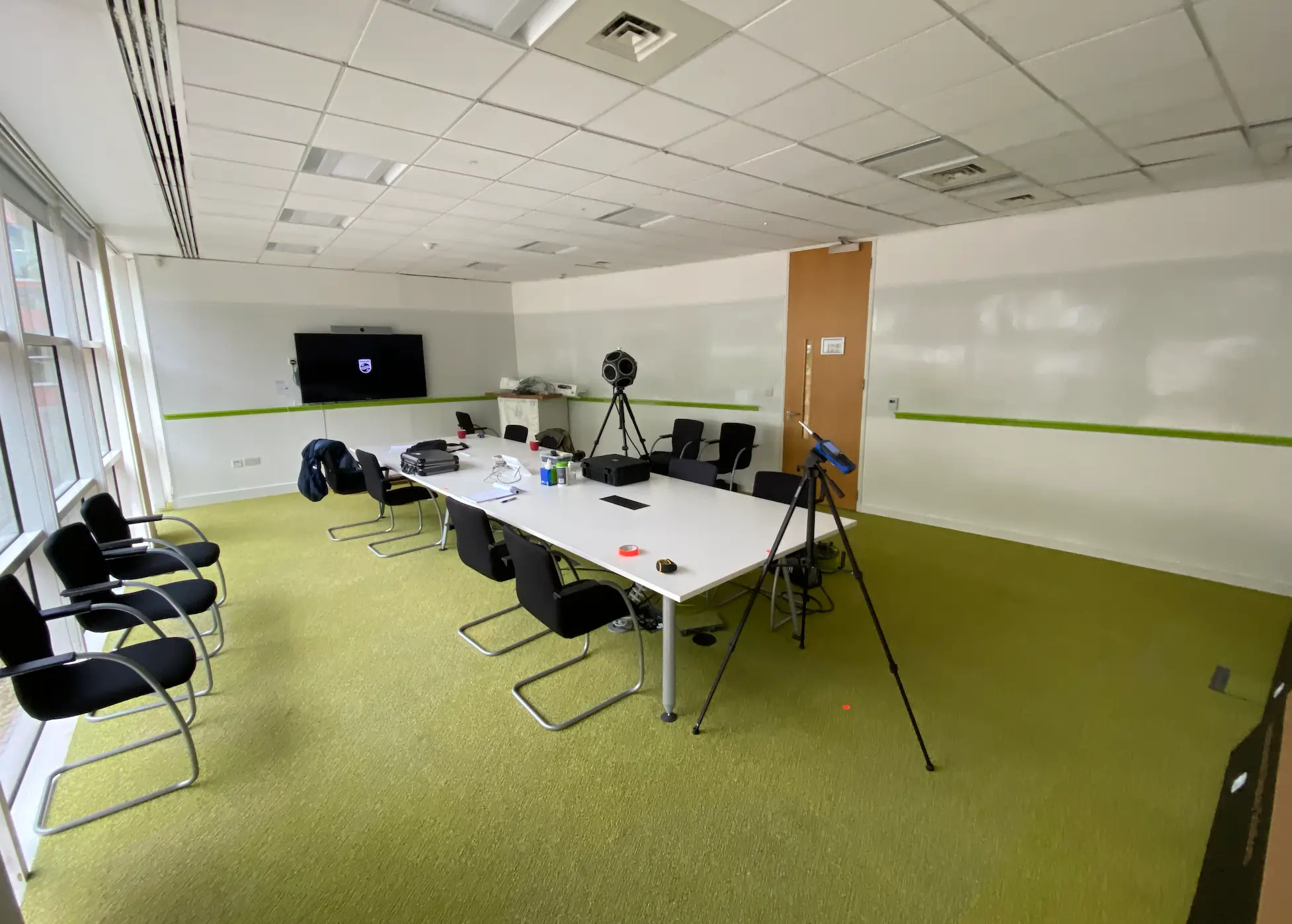
We carry out a systematic set of acoustic measurements across the coverage area with the system in its current state, recording impulse responses, frequency transfer functions and, where applicable, STI values at representative positions. This establishes a documented baseline and identifies the specific areas of time domain misalignment, frequency response irregularity and level imbalance to be addressed.
Delay alignment and time domain correction
Using impulse response analysis, we identify the time of arrival of each loudspeaker subsystem at defined measurement positions and apply delay corrections in the system's DSP processor to establish correct time domain alignment. Accurate delay alignment is a prerequisite for stable and predictable equalisation; systems tuned without proper delay alignment produce equalisation curves that are position-dependent and do not generalise across the coverage area.
Equalisation, level calibration and documentation
With delay alignment established, we apply measurement-informed equalisation to each system and zone, targeting a defined response curve appropriate to the system's intended programme material. Level calibration sets each amplifier and zone channel to consistent reference levels. The finalised configuration is documented in a commissioning report covering delay settings, equalisation curves, level references and the measurement positions and results used in the process.
Post-optimisation verification and handover
On completion of optimisation, we carry out a verification measurement sequence at a representative sample of positions across the coverage area to confirm that the adjusted system meets the agreed performance targets. Results are appended to the commissioning report, which is issued to the client together with a DSP configuration backup. We provide a handover briefing for the venue's technical team covering the documented configuration and the process for restoring settings after maintenance.
Questions
Find answers to common questions about noise assessment and compliance.
Common indicators that a system would benefit from professional optimisation include inconsistent sound levels at different positions in the room, frequency response that sounds very different depending on where you stand, audible comb filtering or phasiness when moving across the coverage area, difficulty achieving intelligible speech without excessive overall level, and operator feedback that the system sounds different every time it is used. If no formal acoustic measurement and alignment process was carried out at the time of installation, the system has not been optimised.
Sound system optimisation is a technical process applied to the system's infrastructure, not to a performance. It establishes the baseline frequency response, time alignment and level calibration from which all mixing decisions are then made. Optimisation is carried out without programme material, using measurement signals and precision instrumentation. Show mixing is an artistic and technical process applied on top of the tuned system. A well-optimised system makes the mixing engineer's job easier and more predictable; a poorly aligned system requires compensatory decisions that change from one engineer to the next.
The duration depends on the number of amplifier channels, DSP processors and coverage zones in the system, and on the complexity of the acoustic environment. A typical restaurant or bar system with two to four zones can be measured and optimised in four to eight hours. A theatre or arts centre system with eight or more zones, multiple subsystem components and a complex acoustic environment will typically require one to two full days on site. A programme and access plan is agreed with the venue before the visit to minimise disruption to the operational schedule.
Acoustic measurements require the venue to be quiet and unoccupied during the measurement sequences. For venues that operate during the day, early morning, late night or dark-day sessions are typically the most practical. For venues with flexible schedules, we agree the measurement windows in advance with the operator. Some measurement tasks, including delay alignment and initial equalisation, can be carried out in sections, allowing the venue to operate between measurement sessions if the schedule requires it.
Yes. Our measurement and analysis process is equipment-neutral and applies to sound systems from any manufacturer. We work with DSP processors from all major brands, including QSC Q-SYS, Crown, Lab.gruppen, Yamaha, Lake and proprietary platforms supplied by system integrators. The only requirement is that the system's DSP platform allows parameter adjustment, which all professional-grade processors do. We document the configuration in the processor's native format and as a written record for future reference.
Need more information?
Reach out to discuss your assessment needs.
Talk to an Acoustic Consultant
Looking for advice on building acoustics, noise control, environmental assessments, or compliance? Send us a message and we'll respond as soon as possible.

.webp)