
Venue & Auditorium Design
Venues designed without acoustic input routinely face two concurrent problems: poor internal acoustic quality that undermines the performance the operator is trying to deliver, and noise breakout that generates neighbour complaints and risks premises licence conditions or enforcement action.
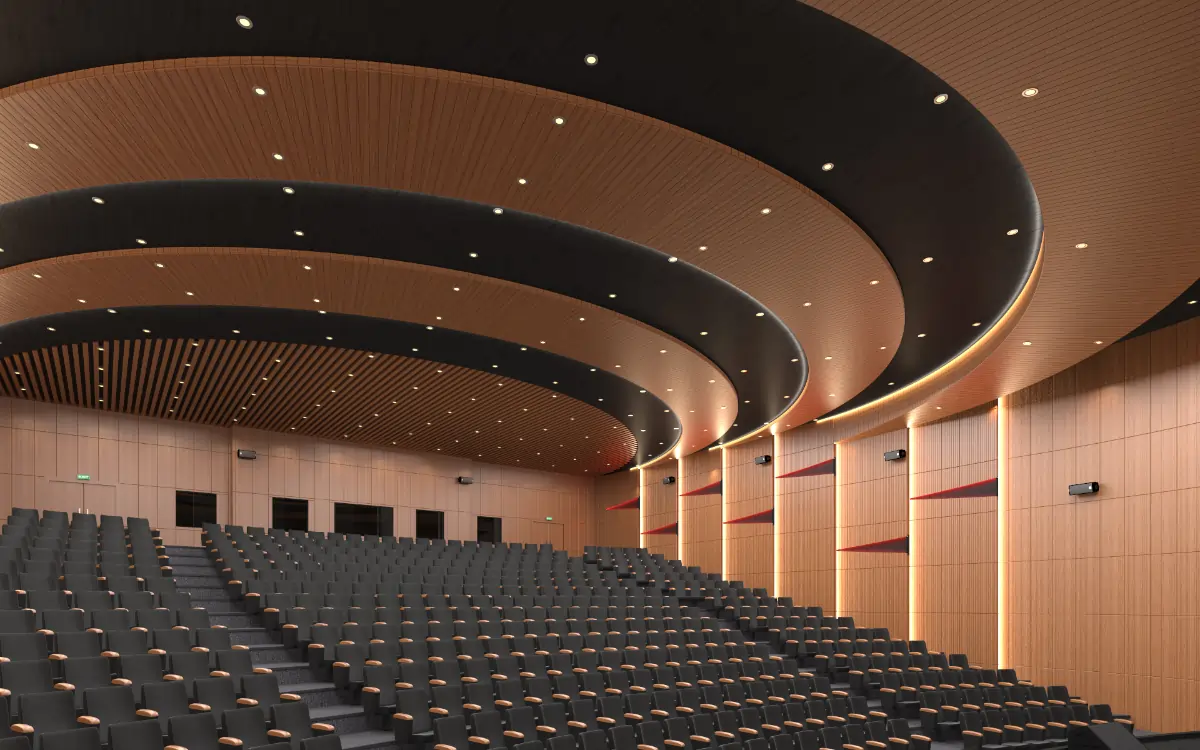

Venue Acoustic Design — What It Involves
Entertainment venues designed without acoustic input face two concurrent problems. Poor room acoustics, including excessive reverberation, unclear sound distribution and inadequate bass control, undermines the experience the operator is trying to deliver and limits what the installed sound system can achieve. Insufficient noise isolation from the building envelope causes breakout that exceeds planning conditions, generates neighbour complaints and creates an ongoing enforcement risk that can ultimately threaten the premises licence.
Venue acoustic design addresses both challenges within a single coordinated package. Room acoustics design specifies the absorption, diffusion and geometric features needed to achieve the target reverberation time, early reflection pattern and bass control appropriate to the venue's intended programme. Noise isolation design specifies the construction required for walls, floors, ceilings, doors, windows and ventilation openings to limit noise breakout to levels that satisfy planning conditions, Environmental Health criteria and the Building Regulations where they apply.
Why does acoustic design matter for your venue?
Planning and licensing compliance
Venues that generate noise in excess of planning conditions or Environmental Health criteria risk enforcement action, licence review and, in serious cases, closure. Acoustic design at specification stage establishes the construction standard and operational limits needed to satisfy the relevant criteria before the building is fitted out, when changes are still low-cost and do not require trading to stop.
Programme quality and audience experience
The acoustic character of a room directly affects how music, speech and performance are heard by the audience. Excessive reverberation smears transients and reduces speech intelligibility; insufficient reverberation makes music sound dry and unconvincing. Acoustic design targets the reverberation time and early reflection structure appropriate to the venue's intended programme, whether live music, amplified performance, speech or a mixed programme.
Sound system performance
A sound system installed in a poorly designed room cannot compensate for the room's acoustic deficiencies. Excessive reverberation, flutter echo between parallel walls and room mode build-up at low frequencies all limit what the system can achieve. Acoustic design reduces these constraints, allowing the installed system to perform closer to its specification and reducing the equalisation burden on the system engineer.
Neighbour and community relations
Venues that generate noise affecting neighbouring properties without adequate acoustic isolation risk planning enforcement, licence review and civil complaints that are substantially more expensive to resolve than the cost of designing correctly at specification stage. Acoustic design that addresses breakout, facades and operational noise limits from the outset gives operators a defensible position in any subsequent dispute with Environmental Health or neighbouring residents.
What acoustic and regulatory standards apply to venue design?
Internal acoustic performance in venues and auditoria is designed to the criteria in BS 8233:2014, which provides noise level design ranges for performance spaces, auditoria, recording studios and other occupied buildings. Room acoustic parameters — reverberation time, clarity (C80, C50), definition (D50) and strength (G) — are designed and measured in accordance with BS EN ISO 3382-1:2009. Where venues operate as educational facilities, BB93 applies to school halls, lecture theatres and drama spaces with room-type specific reverberation targets.
Where a venue generates noise affecting neighbouring properties, BS 4142:2014+A1:2019 governs the impact assessment of amplified music on residential receptors relative to background noise levels, under the NPPF noise policy framework. Planning conditions on commercial venues typically specify a maximum LAeq or LA10 level at the nearest residential boundary, derived from an agreed assessment methodology. Acoustic design for venues therefore treats the internal acoustic performance and external noise impact as parallel and interdependent objectives, both of which must be satisfactorily resolved before planning consent can be granted and the venue can operate.
Post-completion measurement and licensing support
Site acoustic survey and brief
We carry out baseline noise monitoring at the proposed venue location and at the nearest noise-sensitive receptors, establishing the existing ambient conditions against which the venue's noise output and the building's isolation performance must be assessed. The design brief is reviewed to confirm the venue's intended programme, operating hours, expected internal SPL and any existing planning conditions or licensing obligations that apply.
Room acoustics and isolation specification
We specify the acoustic treatment and geometric features required to achieve the target reverberation time and early reflection structure for the venue's intended use. In parallel, we calculate the isolation performance required in each facade element, including walls, floor, ceiling, doors, windows and service penetrations, to limit noise breakout to the applicable planning or licensing criterion at the nearest sensitive receptor. Construction specifications are issued for each element.
Coordination with architects and services engineers
Acoustic requirements for venues often create tension with other design priorities, including natural ventilation, architectural transparency, heritage constraints and construction cost. We work directly with the architect and services engineer to develop construction and ventilation solutions that achieve the acoustic performance targets within the constraints of the project. Where trade-offs are necessary, we quantify the acoustic consequence of each option so that decisions are made with full information.
Post-completion measurement and licensing support
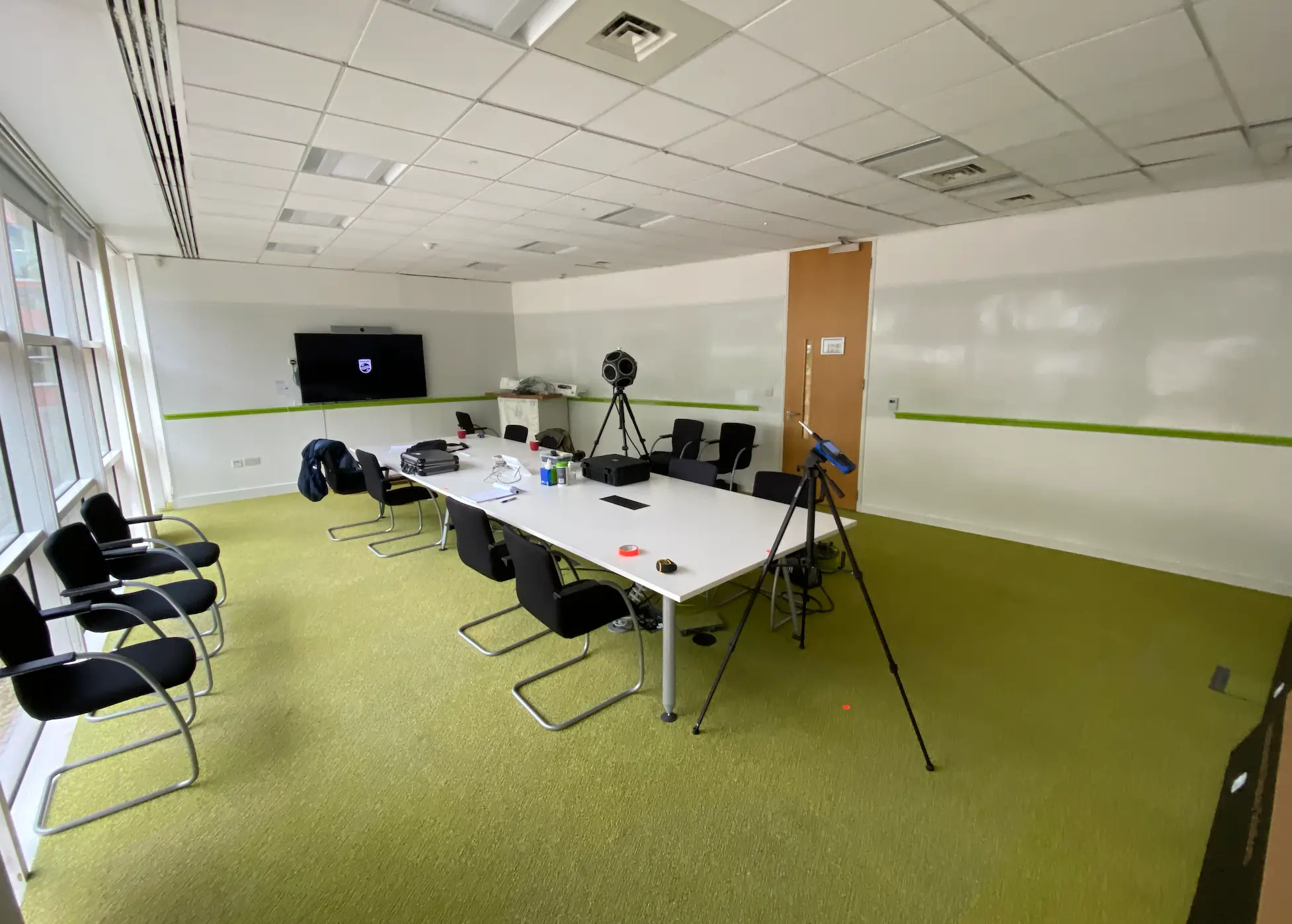
On completion of the fit-out, we carry out noise level measurements inside the venue and at the boundary to confirm that the as-built construction meets the design targets and satisfies the applicable planning and licensing criteria. Where noise levels are marginal, we advise on operational noise management, including sound limiter settings, operating hours and event types, to maintain compliance. Measurement results are submitted to the planning authority or licensing authority as evidence of compliance.
Questions
Find answers to common questions about noise assessment and compliance.
A noise refusal typically means the authority is not satisfied that the proposed construction and operational controls will prevent unacceptable noise impact on neighbouring residents or businesses. The options are to provide an acoustic assessment demonstrating that the original design will meet the relevant criteria, to redesign the construction to achieve higher isolation performance, or to modify the operational parameters, for example a lower maximum internal SPL, earlier closing time or a more limited programme scope. We advise on which approach is most likely to succeed based on the specific refusal reasons and the gap between the original proposal and the required performance.
There is no single national limit that applies to all venues. The applicable criteria depend on the planning conditions attached to the site, any noise conditions in the premises licence, Environmental Health guidance in the local authority's noise policy and the agent of change principle established in the NPPF. Planning authorities typically require that the venue's contribution to external noise at the nearest residential facade does not exceed the existing background level by more than 0 to 5 dB(A), though specific limits vary. We advise on the criteria applicable to the specific site and programme.
Yes, in almost all cases. Planning noise conditions are typically worded to require submission of an acoustic report demonstrating that the proposal meets specified external noise criteria before development or change of use commences. The condition is discharged by submitting that report to the local planning authority for approval. Operating the venue without discharging the condition is a breach of planning law. EMC Acoustics prepares the acoustic assessment, specifies the required construction and, on completion, carries out the verification measurements needed to support the discharge application.
Room acoustics describes how sound behaves inside the venue, including how long it reverberates, how early reflections from walls and ceiling contribute to the listening experience and how bass energy is distributed. Noise isolation describes how well the building envelope attenuates sound between the venue interior and the outside, or between the venue and adjacent spaces in a mixed-use building. Both are essential for a successful entertainment venue, and acoustic design must address both simultaneously because the required isolation performance depends directly on the maximum internal operating level.
Yes, though retrofit is generally more expensive and less effective than designing correctly at specification stage. For venues with noise breakout complaints, we measure current noise levels at affected receptors and at the venue boundary, identify the primary sound transmission paths and specify targeted improvements to walls, ceilings, doors and service penetrations. For venues with poor room acoustics, we model the existing conditions and specify additional absorption, diffusion or bass management measures. Post-improvement measurements confirm the achieved performance and provide evidence for the operator to present to the licensing authority or Environmental Health Officer if noise complaints are ongoing.
Need more information?
Reach out to discuss your assessment needs.
Talk to an Acoustic Consultant
Looking for advice on building acoustics, noise control, environmental assessments, or compliance? Send us a message and we'll respond as soon as possible.

.webp)